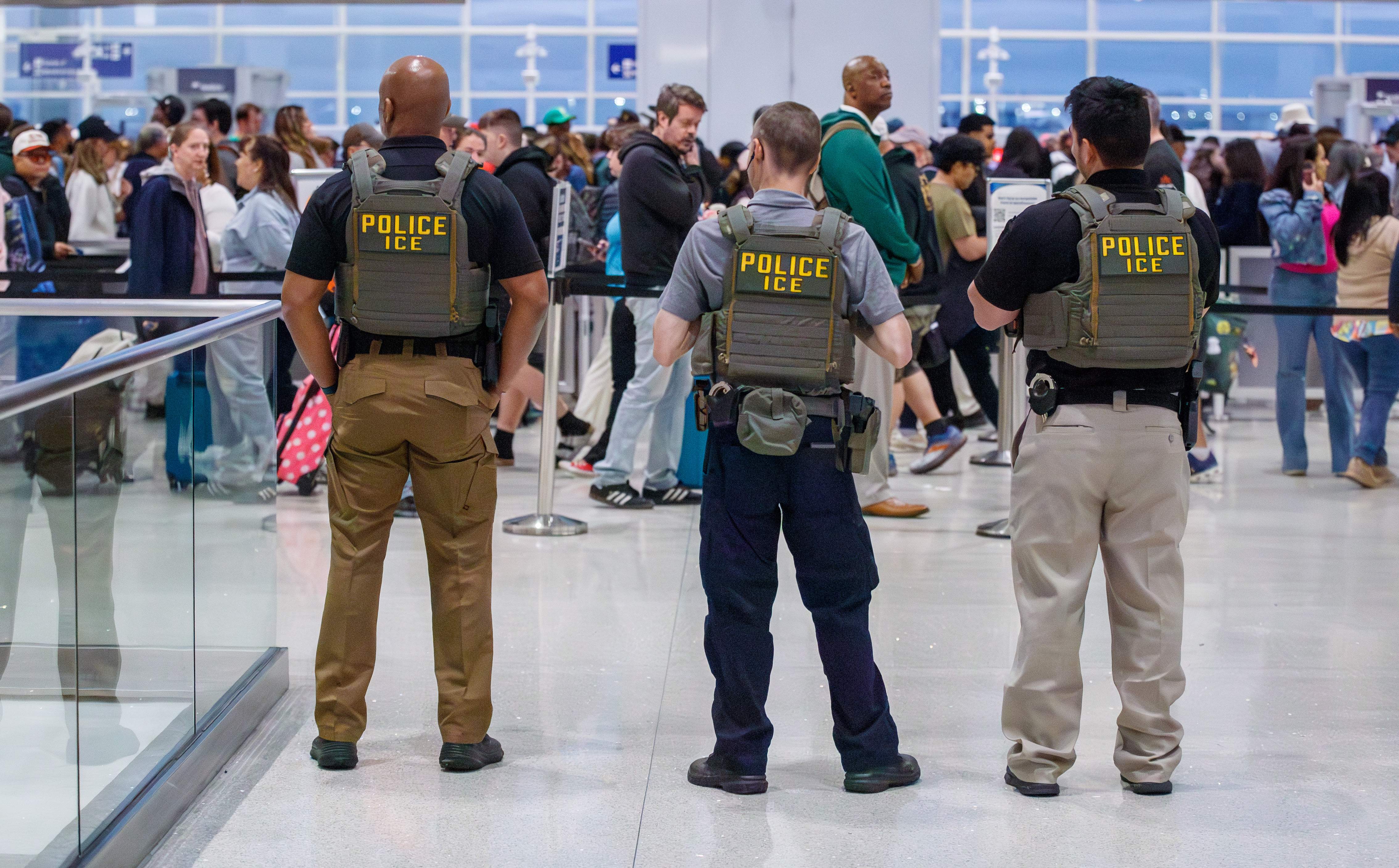
The headlines are screaming again. You’ve seen them. "TSA lines stretch for hours." "Chaos at O'Hare." "Trump deploys ICE agents to airports." The media wants you to be outraged by the wait times. They want you to view the influx of auxiliary agents as a logistical nightmare or a political stunt.
They are wrong. Not because the lines aren't long—they are—but because they are asking the wrong question. They are asking how to make the machine run faster. They should be asking why the machine exists at all.
If you are standing in a two-hour line at JFK, the problem isn't a lack of staff. The problem is a "security" theater production that has finally run out of budget for the actors. We have spent two decades conditioned to believe that throughput is the metric of success. It’s not. Friction is the only thing the TSA produces, and more "agents"—whether they wear TSA blue or ICE tactical gear—is just more friction.
The Myth of Professionalism in the Peep Show
The competitor narrative suggests that bringing in ICE agents to "assist" at checkpoints is a downgrade in quality. This assumes there was quality to begin with.
Let’s be precise about the expertise we are talking about. The TSA has a storied history of failing undercover "red team" tests. In 2015, the failure rate for detecting weapons and explosives was 95%. By 2017, it hadn't improved much. We are talking about an agency that routinely misses loaded handguns but will confiscate a four-ounce jar of expensive marmalade with the fervor of a bomb squad.
ICE agents, whatever your political leanings, are trained in actual enforcement and investigation. The TSA is trained in compliance and folder-checking. The outcry that "non-TSA" staff are manning the lines misses the point: a cardboard cutout of a stern man would likely have the same deterrent effect as the current screening process.
The "crisis" isn't the deployment of outside agents. The crisis is the admission that the entire $10 billion annual budget of the TSA is so fragile that a shift in border policy or a surge in spring break travel brings the American aviation network to its knees.
The High Cost of the "Efficiency" Trap
The "lazy consensus" says we need more funding, more PreCheck lanes, and more "seamless" technology.
I’ve watched airlines and government agencies burn through billions trying to "fix" the airport experience. They won't. Because the airport experience is designed to be a bottleneck. It is a captured market.
When you hear that lines are stretching for hours, don't look at the agents. Look at the incentives.
- The Upsell: Long lines drive PreCheck and CLEAR enrollments. The government and private corporations literally profit from the misery of the standard line.
- The Justification: A smooth, fast-moving line suggests the threat is low. A chaotic, high-stress line justifies the "necessity" of the security state.
- The Budget Cycle: Nothing secures a budget increase like a front-page photo of a grandmother missing her flight in Atlanta.
By complaining about the wait times, you are playing into the hands of the bureaucrats. You are begging for more "protection" when you should be demanding less interference.
The ICE Deployment is a Feature, Not a Bug
The critics argue that moving ICE agents to airports "weakens our borders" and "terrorizes travelers."
Let’s look at the mechanics. If the government can move agents from the border to the airport, it proves that the roles are interchangeable, which means the specialized training we are told is "paramount" is actually a myth. It reveals that "security" is just a matter of having bodies in uniforms standing in specific places.
Imagine a scenario where we stopped pretending that every traveler was a sleeper cell. If we actually used intelligence-based screening instead of the "everyone takes their shoes off" mass-compliance model, we wouldn't need ICE agents, TSA agents, or dogs. We would need about 10% of the current workforce.
The deployment of ICE isn't a sign of a failing system; it's a sign of a system that has reached its logical conclusion: total homogenization of "enforcement." Whether you are crossing the Rio Grande or flying from Peoria to Chicago, you are treated as a data point to be processed, not a citizen with a right to movement.
Stop Asking for Shorter Lines
People ask: "How can I get through the airport faster?"
They ask: "When will the TSA get more funding?"
These are the wrong questions. The right question is: "Why am I paying a 'September 11 Security Fee' on every ticket for a service that fails 95% of its tests?"
If the lines are long, good. Let them stay long. Let the system become so visibly, painfully broken that we stop trying to "fix" it with more agents. The moment we make the TSA "efficient," we bake it into the American experience forever. We accept it as a permanent tax on our time and dignity.
The "chaos" at the airports is the only honest thing about the TSA. It is the physical manifestation of government inefficiency. Don't ask for more ICE agents to speed it up. Don't ask for more TSA funding.
The Unconventional Truth of Aviation Security
True security happens long before you reach the airport. It happens in intelligence rooms and through international cooperation. Everything that happens between the check-in desk and the gate is a psychological sedative. It exists to make the person in seat 12B feel "safe" while they eat their $14 sandwich.
We are currently witnessing a labor dispute disguised as a security crisis. TSA workers are historically underpaid and overworked. The deployment of ICE is a "scab" maneuver to keep the theater running while the primary actors are burnt out.
If you want to actually "solve" the airport crisis, you don't hire more people. You eliminate the 3-1-1 liquid rule, which has no scientific basis for preventing a multi-stage liquid explosive. You stop the redundant ID checks. You stop the shoe removal.
You turn the airport back into a transportation hub instead of a detention center lite.
The Hard Reality of Travel in 2026
I’ve spent fifteen years navigating the logistics of global travel. I’ve seen the shift from "common sense" to "common compliance." The current outcry over ICE agents at airports is a distraction. It’s a shiny object designed to get people arguing about immigration policy instead of noticing that their basic right to travel is being throttled by a bloated, ineffective bureaucracy.
The downsides of this take? Sure, you’ll spend four hours in a line this Thursday. You might miss your flight. You’ll definitely be annoyed. But if you demand a "fix," you are just asking for a more polished cage.
The next time you see a line snaking out the door and into the parking garage, don't tweet at the TSA to "do better." They can't. They aren't built to do better; they are built to do more.
Instead, recognize the line for what it is: the inevitable collapse of a system built on the illusion of safety. Stop participating in the lie that more uniforms equals more security.
Take the train. Drive. Or stand in the line and finally admit that the theater is no longer worth the price of the ticket.
Stop trying to fix the TSA. Start demanding its dissolution.