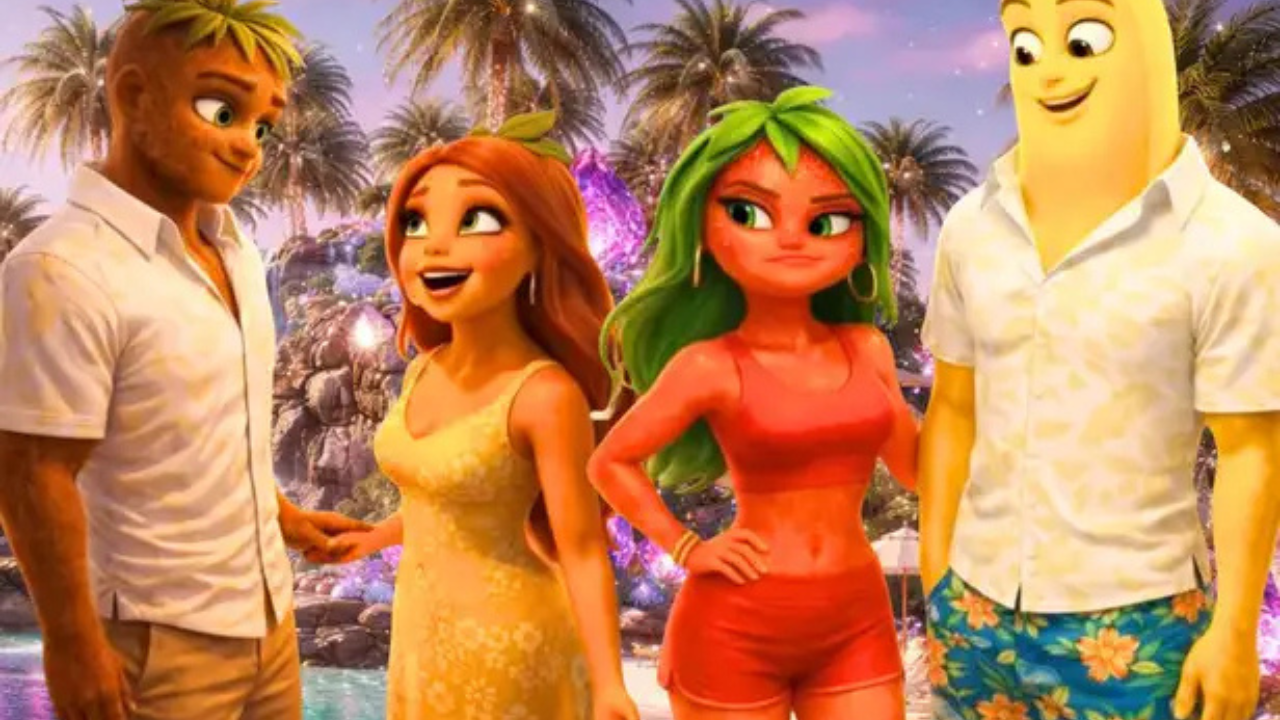
The removal of the Fruit Love Island TikTok account marks a breaking point in the platform's relationship with generative media. One day, millions of viewers were watching anthropomorphic mangoes and strawberries engage in scripted reality show drama. The next, the account was a ghost town of "Content Removed" flags and community guideline strikes. While the creator rants about censorship, the real story lies in the shifting tectonic plates of automated moderation and the specific, unwritten rules of the attention economy.
TikTok did not just delete some videos. It signaled that the era of low-effort, AI-generated "brain rot" content is facing a massive internal audit.
The Mechanics of the Fruit Love Island Purge
The account functioned on a simple, effective loop. Using tools like Midjourney for character design and various lip-syncing software, the creator staged parodies of UK reality television. The absurdity of a grape with a six-pack arguing about "loyalty" in a thick Essex accent was enough to bypass the usual barriers to entry. It was cheap to produce, infinitely scalable, and high-frequency.
However, the purge happened because the account hit a specific tripwire in TikTok’s Trust and Safety algorithm. This isn't about the fruit. It is about the way the platform identifies "unoriginal" and "low-quality" content. When an account produces hundreds of variations of the same visual assets with minor tweaks, the system eventually flags it as spam.
Behind the scenes, the "rant" from the creator claims they were targeted for their humor. The reality is more technical. TikTok’s latest updates to its Recommendation System (the For You Page) have started penalizing accounts that rely heavily on static image animation. The platform wants "high-value" video content—actual cinematography or complex editing—not just puppets moving over a background.
The Hidden War on Synthetic Satire
We are seeing a massive disconnect between what users find funny and what the platform finds profitable. The "Fruit Love Island" videos were getting millions of views, but they were a nightmare for the ad-sales department. Advertisers are increasingly hesitant to place their products next to content that looks like it was made by a machine in thirty seconds.
There is also the issue of "Uncanny Valley" violations. TikTok has updated its policies regarding synthetic media several times in the last six months. They now require clear labeling for AI-generated content that looks realistic. While a talking orange isn't "realistic," the underlying code used to create it often triggers the same deepfake detection filters meant to stop political misinformation.
The creator’s frustration stems from a lack of transparency. TikTok rarely tells a user which pixel or which line of dialogue triggered a ban. They provide a vague category, like "Integrity and Authenticity." For a digital creator, that is like being told you’re being evicted for "reasons," while the landlord refuses to show you the lease.
The Economic Reality of the "Brain Rot" Genre
To understand why this matters, you have to look at the "Creator Rewards Program." TikTok pays out based on original, high-quality content. Synthetic accounts like Fruit Love Island are essentially arbitrage plays. They attempt to generate the maximum amount of engagement with the minimum amount of human labor.
- Production Cost: Near zero.
- Time to Market: Minutes.
- Retention Rate: High (due to the novelty).
This model threatens the traditional creator economy. If a fruit-based parody can pull more views than a filmmaker who spent three weeks on a travel vlog, the filmmaker leaves the platform. TikTok cannot afford to lose the filmmakers. By nuking the Fruit Love Island account, they are effectively protecting their "prestige" creators from being drowned out by an infinite sea of generated vegetables.
Why the Creator's Rant is Mostly Theater
In their public response, the creator behind the account framed the removal as a moral failing of the platform. They talked about "freedom of expression" and "corporate overreach." This is a standard playbook for influencers who get de-platformed. It builds a "us vs. them" narrative that helps migrate the audience to other platforms like YouTube Shorts or Instagram Reels.
But let’s be clear: this was a business decision. TikTok owns the digital real estate. They decided that "Fruit Love Island" was devaluing the neighborhood. The account was likely hit with a "Shadowban" first—a restriction on reach—before the mass removals started. When the creator didn't pivot their style to be more "human," the platform took the final step.
The counter-argument is that TikTok is killing its own soul. The platform became a titan because of its weird, niche, and often nonsensical trends. By sanitizing the feed and purging the "weird AI stuff," they risk becoming as sterile as linear television.
The New Rules of Engagement
If you are a creator looking to use synthetic media, the Fruit Love Island saga is your field manual on what not to do. You cannot simply automate the humor. The platform is looking for a "human in the loop."
- Stop using templated movements. If your characters move the same way in every video, the algorithm treats it as a duplicate.
- Diversify your assets. Using the same "Love Island" background for 50 videos is a fast track to a community guideline strike for spam.
- Disclose early. The "AI" tag isn't just a suggestion; it’s a shield.
The mass removal of these videos wasn't a glitch. It was a feature of a platform that is maturing and, in the process, becoming much more aggressive about what it considers "content." The fruit characters might have been the victims this time, but they won't be the last. Any creator relying on a single AI gimmick is currently standing on a trapdoor.
The Ghost in the Machine
We are entering a period where the "uncanny" is being legislated out of our feeds. TikTok’s AI is now sophisticated enough to recognize the output of other AIs. It’s a snake eating its own tail. The system that was built to show you what you like is now being used to tell you what you should like, based on a set of corporate standards that don't always align with what is actually viral.
The creator of Fruit Love Island can complain all they want, but the house always wins. If your entire brand is built on a foundation you don't own, using tools that the platform is actively trying to suppress, you aren't a creator—you're a squatter. And the eviction notices are starting to fly.
Check your own analytics for "Eligible for For You Feed" status. If that percentage is dropping, you are likely the next one on the list.