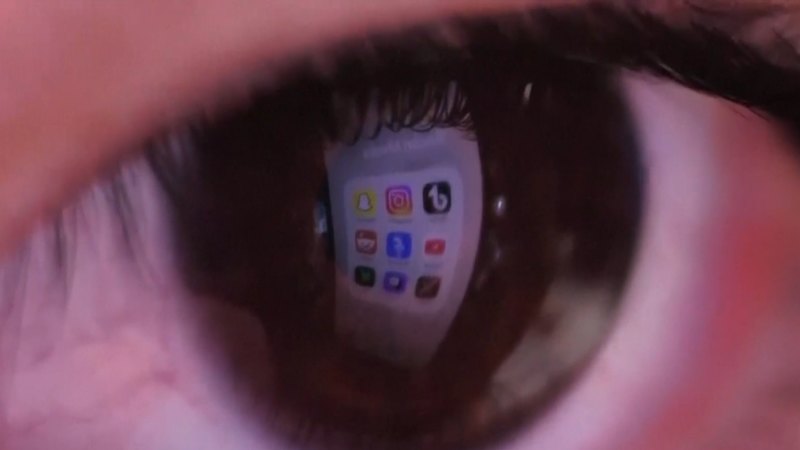
The blue light hits a teenager's face at 2:14 AM, casting a ghostly pallor that makes them look more like a statue than a living, breathing human. This isn't an isolated incident. It is a calculated outcome. For years, we treated social media as a digital playground—a harmless, if slightly annoying, place for kids to post selfies and trade jokes. We were wrong. A series of landmark legal rulings has finally peeled back the curtain on the "attention economy," revealing that the platforms we trusted were never designed for connection. They were designed for capture.
Courts in the United States have recently moved forward with massive, consolidated litigation against Meta, YouTube, TikTok, and Snap. The core of the argument is chillingly simple: these companies intentionally designed their products to hook young brains, bypassing the underdeveloped impulse control of minors to maximize profit. This isn't just about a "lack of willpower." It is about a billion-dollar psychological war where the weapons are algorithms and the casualties are our children.
The Architecture of the Hook
Consider Leo. He is fourteen, bright, and played varsity soccer until six months ago. Now, he misses practice because he "didn't sleep well." In reality, Leo is trapped in a feedback loop. When he opens an app, he isn't just looking at photos; he is engaging with a variable reward schedule. This is the same psychological mechanism that keeps a gambler tethered to a slot machine. Sometimes the "pull" of the feed yields a hilarious video or a "like" from a crush. Other times, it’s filler. That unpredictability is the secret sauce. It triggers a dopamine spike that demands another swipe. And another.
The legal filings describe these features not as bugs, but as "addictive design elements." Features like infinite scroll—where the content never ends, removing any "stopping cue" for the brain—act as a bottomless bowl of soup. If the bowl never empties, the brain never receives the signal to stop eating. For a developing prefrontal cortex, the part of the brain responsible for executive function and long-term consequences, this is an unfair fight. It is like asking a toddler to win a marathon against an Olympic sprinter.
The Ghost in the Machine
We often hear the phrase "the algorithm," but we rarely stop to think about what it actually is. It is a mathematical predator. It watches how long Leo lingers on a video of a fit influencer. It notices that he pauses for two seconds longer on a post about "how to get shredded." Within forty-eight hours, Leo’s feed is a localized storm of body dysmorphia, supplement ads, and extreme workout routines.
The companies argued for years that they were merely "neutral platforms" or "bulletin boards." They claimed protection under Section 230 of the Communications Decency Act, a law designed to shield internet companies from being sued for what their users post. But the courts are beginning to see through that facade. The judges aren't blaming the companies for the content of the posts; they are blaming them for the design of the delivery system. The "product" isn't the video itself; the product is the addictive mechanism that forced the video onto Leo’s screen when he was at his most vulnerable.
This distinction is the hinge upon which the future of the internet turns. If a car manufacturer builds a seatbelt that fails, they are liable. If a toy company uses lead paint, they are liable. Why, the courts are asking, should a tech company be immune when they build a digital product that causes documented neurological harm?
The Hidden Cost of "Free"
Nothing is free. We paid for these apps with the mental health of a generation. Internal documents leaked from within these tech giants—most notably the "Facebook Files"—revealed that the companies knew. They knew that Instagram was "toxic" for a significant percentage of teenage girls. They knew that their algorithms steered users toward eating disorder content and self-harm loops.
They saw the data. They watched the engagement metrics climb as the mental health metrics plummeted.
They chose the money.
For a business, "engagement" is the holy grail. But for a human, "engagement" is often just another word for "obsession." When a platform boasts that users spend an average of four hours a day on their app, they are describing a theft of time. That is twenty-eight hours a week. It is a part-time job that pays in anxiety and takes away sleep, exercise, and real-world social interaction.
The Chemical Hijack
To understand why this is happening, we have to look at the biology. Our brains are wired for social belonging. For our ancestors, being cast out of the tribe meant death. Social media hijacks this ancient survival instinct. A "like" or a "share" isn't just a digital metric; to a teenager, it is a signal of social safety. Conversely, a lack of engagement feels like a threat to their very existence.
The platforms capitalize on "FOMO," or the Fear Of Missing Out. By using disappearing stories and "streaks," they create a sense of urgency. If Leo doesn't check Snap today, he loses his 300-day streak with his best friend. The app frames this as a fun game, but to Leo’s brain, it’s an obligation. It’s a stressor. It’s a chore he has to perform to maintain his social standing.
Metaphorically speaking, we have allowed tech companies to install a direct line into our children’s nervous systems. They can dial up the cortisol or trigger a dopamine rush whenever their quarterly earnings need a boost.
The Turning Tide
The legal battle is not just about money. It is about a fundamental shift in how we view the digital world. For the first time, we are moving past the "buyer beware" phase of the internet. We are starting to demand that these digital spaces be built with human safety in mind.
The defense from the tech giants has been predictable. They talk about "parental tools" and "age verification." They put the burden back on the family. But how is a parent supposed to compete with a team of the world’s most talented data scientists and psychologists? It is an asymmetrical war. A parent can take the phone away at night, but they cannot rewrite the code that makes the phone so hard to put down in the first place.
The courts are now entertaining the idea of "strict liability." This means that if a product is inherently dangerous to minors, the manufacturer is responsible, regardless of how much they claim they didn't mean to cause harm. It’s a seismic shift.
The Silence at the Dinner Table
The true impact of this addiction isn't found in a courtroom or a legal brief. It’s found in the quiet moments of everyday life. It’s the silence at a dinner table where four people are physically present but mentally miles apart, staring into glowing rectangles. It’s the rise in "loneliness in a crowd," where we have five hundred "friends" but no one to call when our dog dies.
We are living through a massive, uncontrolled experiment on human psychology. We gave a generation of children high-speed access to every opinion, every beauty standard, and every outrage in the world, and we did it before they knew how to cross the street safely.
The lawsuits won't fix everything. They won't magically give Leo his sleep back or return the hours he spent scrolling through the abyss. But they represent a line in the sand. They are a collective "enough." We are finally admitting that the digital world is not a separate, ethereal realm where the rules of human decency and corporate responsibility don't apply. It is our world. And it is time we took it back.
The light on Leo's face finally fades as his phone battery dies. He blinks, the darkness of his room suddenly heavy and disorienting. For a moment, he doesn't know what to do with his hands. He feels an itch in his palm, a phantom vibration that isn't there. He is a pioneer in a world that wasn't built for him, staring at the ceiling, waiting for the sun to rise so he can start the hunt for the next hit of blue light.
The machine is still out there, humming in data centers across the globe, waiting for him to plug back in. It doesn't sleep. It doesn't get tired. It just waits.