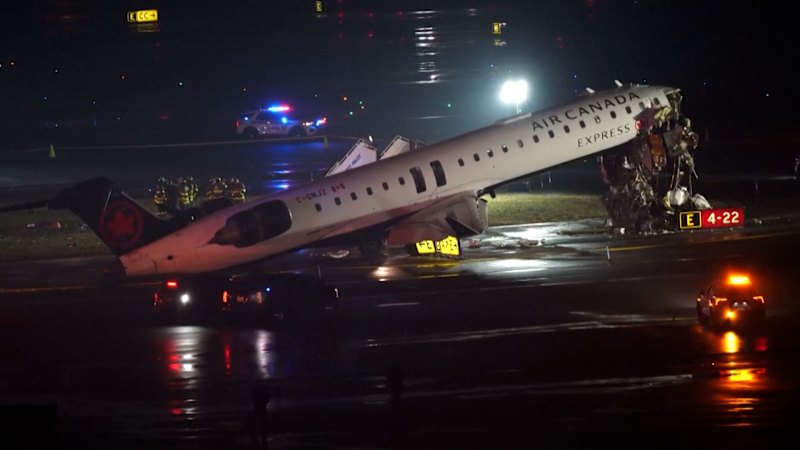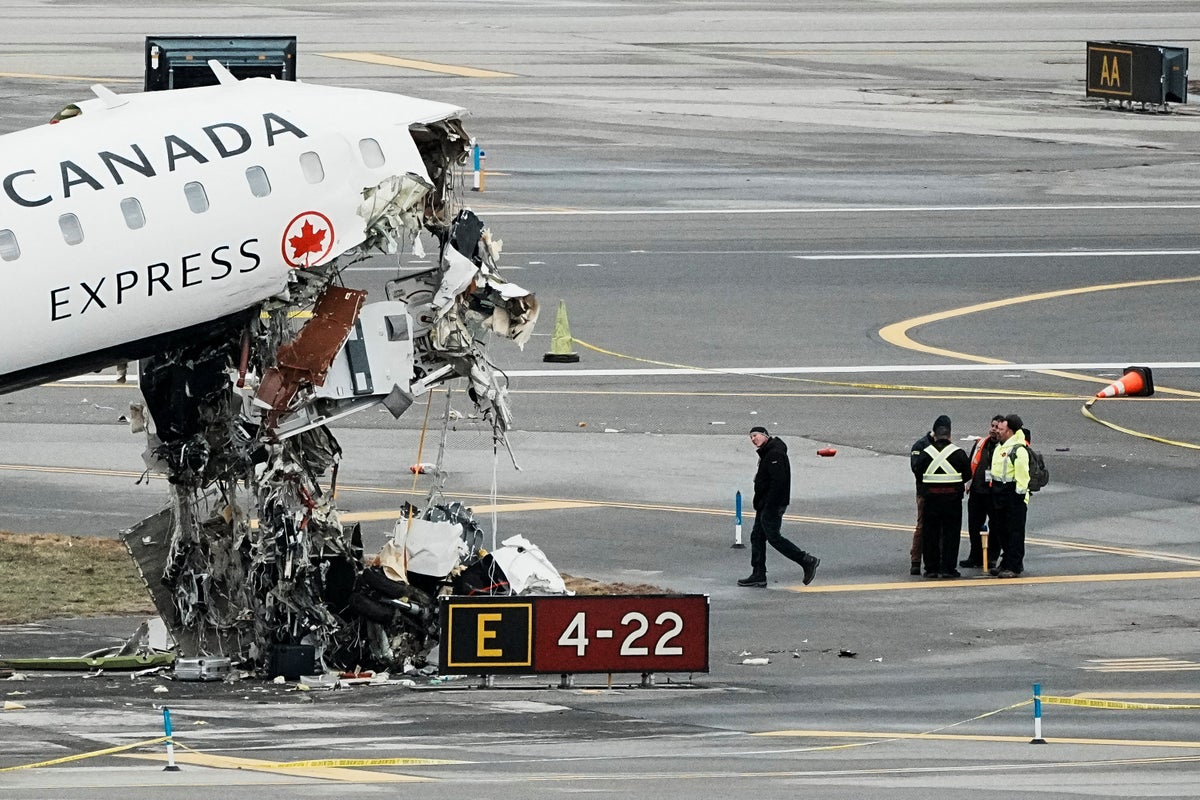
The cabin of an airplane is a strange, liminal space where we collectively agree to pretend we aren’t hurtling through the sky at five hundred miles per hour. We settle into thin polyester seats, worry about the price of the onboard WiFi, and ignore the safety demonstration as if it were a tiresome legal disclaimer before a software update. Most of the time, that apathy is rewarded with a boring landing and a taxi to the gate. But on a recent afternoon at LaGuardia, the thin veil of "normalcy" shredded in less than three seconds.
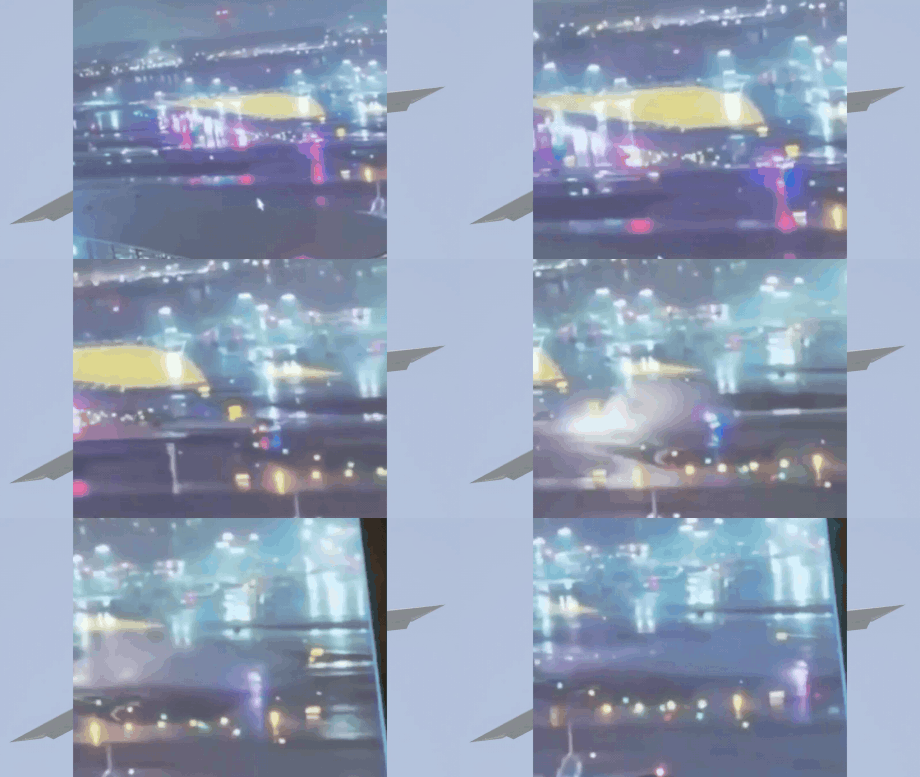
It happened in the blink of a shutter. A plane, a runway, and a sudden, violent deviation from the script. The footage that emerged afterward—grainy, shaky, and terrifyingly real—captured the moment of impact with a clarity that cold news reports can never quite replicate. You see the wings dip. You see the sudden, jarring shudder of the fuselage. Then, the silence of the aftermath. Don't miss our previous post on this related article.
For the people inside that cabin, the world didn’t end with a bang or a cinematic explosion. It ended with the sound of grinding metal and the visceral, stomach-flipping realization that the laws of physics were no longer being politely obeyed.
The Physics of the Unforeseen
When a plane hits the ground with unintended force, the energy doesn't just disappear. It travels. It ripples through the airframe, vibrates through the floorboards, and eventually looks for the softest thing to stop its momentum. Usually, that is the human body. If you want more about the context of this, National Geographic Travel offers an informative breakdown.
Consider a hypothetical passenger named Elias. Elias is a frequent flier, the kind of person who knows exactly which lounge has the best espresso and which seats have the most legroom. He’s flown into LaGuardia a hundred times. He knows the skyline of Queens like the back of his hand. As the plane descended on this particular day, Elias might have been checking his watch or thinking about his 4:00 PM meeting. He likely didn't have his seatbelt fastened. Why would he? The "Fasten Seatbelt" sign was a suggestion, a flickering light he’d learned to tune out years ago.
Then the impact hit.
In a laboratory, we talk about G-forces and deceleration vectors. In a cabin, we talk about people becoming projectiles. Without that simple nylon strap, Elias is no longer a passenger; he is an object in motion. $F = ma$ is not a classroom theory when your forehead is moving toward the seatback in front of you at forty miles per hour. The seatbelt is the only thing standing between a bruised hip and a traumatic brain injury.
This isn't just about the "big" crashes—the ones that make the nightly news with soaring music and somber anchors. This is about the "minor" incidents that happen every week. Severe turbulence, a clipped wing on a taxiway, or a hard landing caused by a sudden gust of wind over the East River. These are the moments where the difference between walking off the plane and being carried off is exactly two inches of webbing and a metal buckle.
The Warning from the Top
The recent warnings from transportation officials weren't born out of a desire to nag. They were a reaction to a trend that has safety experts sweating through their suits. We are getting complacent. As technology makes flying safer, our personal vigilance is eroding. We trust the pilots, we trust the engineers, and we trust the air traffic controllers. But we forget to trust the most basic piece of safety equipment ever invented.
A high-ranking official recently noted that the LaGuardia incident should serve as a "wake-up call." It sounds like a cliché until you watch the video of that impact. The plane doesn't just land; it fights the earth. You can see the struggle in the way the landing gear groans under the weight of a miscalculation.
When an official tells you to "wear your seatbelt," they aren't thinking about the smooth flight at thirty thousand feet. They are thinking about the "moment of impact." They are thinking about the data points they have to collect from cabins where people didn't listen. They see the cracked overhead bins where heads hit the ceiling during clear-air turbulence. They see the broken armrests and the shattered windows.
The Illusion of Control
We love to feel in control. We choose our seats, we choose our meals, and we choose when to stand up to stretch our legs. But the second that plane touches the tarmac at LaGuardia—a runway famously short and surrounded by water—control is a shared hallucination.
Imagine the cabin in those seconds after the impact. The smell of scorched rubber. The sound of heavy breathing. The frantic checking of limbs. For those who were buckled in, it was a terrifying jolt, a story to tell at dinner, a reason to call their mother. For those who weren't, it was a blurred sequence of pain and confusion.
The seatbelt isn't just a safety device; it’s a tether to reality. It’s the thing that keeps you in your seat so that when the plane stops moving, you can too. It turns a potential tragedy into a "horrifying moment" that ends with everyone walking away.
The Human Cost of "Just a Second"
We’ve all done it. The flight is long, your back hurts, and you unclick the buckle just to shift your weight. You tell yourself it’s fine. The weather is clear. The pilot sounds calm. You’ll click it back if things get bumpy.
But gravity doesn't give you a heads-up.
The LaGuardia video shows that the transition from a routine arrival to a "horrifying moment of impact" happens faster than a human can react. You cannot brace yourself against a thousand-pound force. You cannot "hold on" to the armrests tight enough to stay in your seat. You are either strapped to the heavy, reinforced frame of the aircraft, or you are at the mercy of the laws of motion.
There is a psychological weight to these events that we rarely discuss. The survivors of the LaGuardia incident will likely never fly the same way again. They will be the ones who check their buckles three times before takeoff. They will be the ones who stay seated even when the "Fasten Seatbelt" sign is off. They have seen the curtain pulled back. They know that the "dry facts" of a safety briefing are actually the coordinates of their survival.
Beyond the Viral Video
The video of the crash went viral because humans are hardwired to look at wreckage. We find a morbid fascination in the "moment of impact." But the real story isn't the plane hitting the ground. The real story is what happened inside the cabin in the minutes that followed.
It was the sight of strangers reaching out to hold hands. It was the frantic help offered by flight attendants who had trained for this exact nightmare. It was the realization that, in the face of a machine failing, our only recourse is each other—and the simple, low-tech tools we often overlook.
We live in an age of "cutting-edge" automation and "holistic" safety systems, but at the end of the day, your life often depends on a piece of technology that hasn't changed much since the 1950s. The seatbelt is an elegant, brutal solution to a fundamental problem: humans weren't meant to move this fast.
Next time you hear that metallic click as you settle into seat 14B, don't think of it as a restriction. Think of it as a promise. It’s a promise that no matter what happens on that runway—no matter how hard the wind blows or how short the pavement feels—you are staying right where you belong.
The sky is a beautiful place, but the ground is very hard. The six inches of nylon across your lap is the only thing that ensures you get to keep enjoying both.
The video from LaGuardia will eventually fade from the news cycle. The headlines will be replaced by the next crisis, the next viral clip, the next political warning. But the lesson remains, etched into the tarmac and recorded in the memories of those who were there. Safety isn't a grand, sweeping gesture made by an airline. It is a small, quiet choice made by a passenger. It is the click of a buckle in the dark, a silent acknowledgment that while we cannot control the wind or the metal or the "moment of impact," we can choose to be ready for it.
The plane eventually came to a halt. The emergency slides were deployed. The passengers spilled out onto the grass, shaken and shivering in the New York air. They looked back at the machine that had just tried to break them, and for many, the most beautiful thing they had ever seen was the simple, sturdy seat they had just left behind.
The click of a seatbelt is the sound of a story that gets to continue.