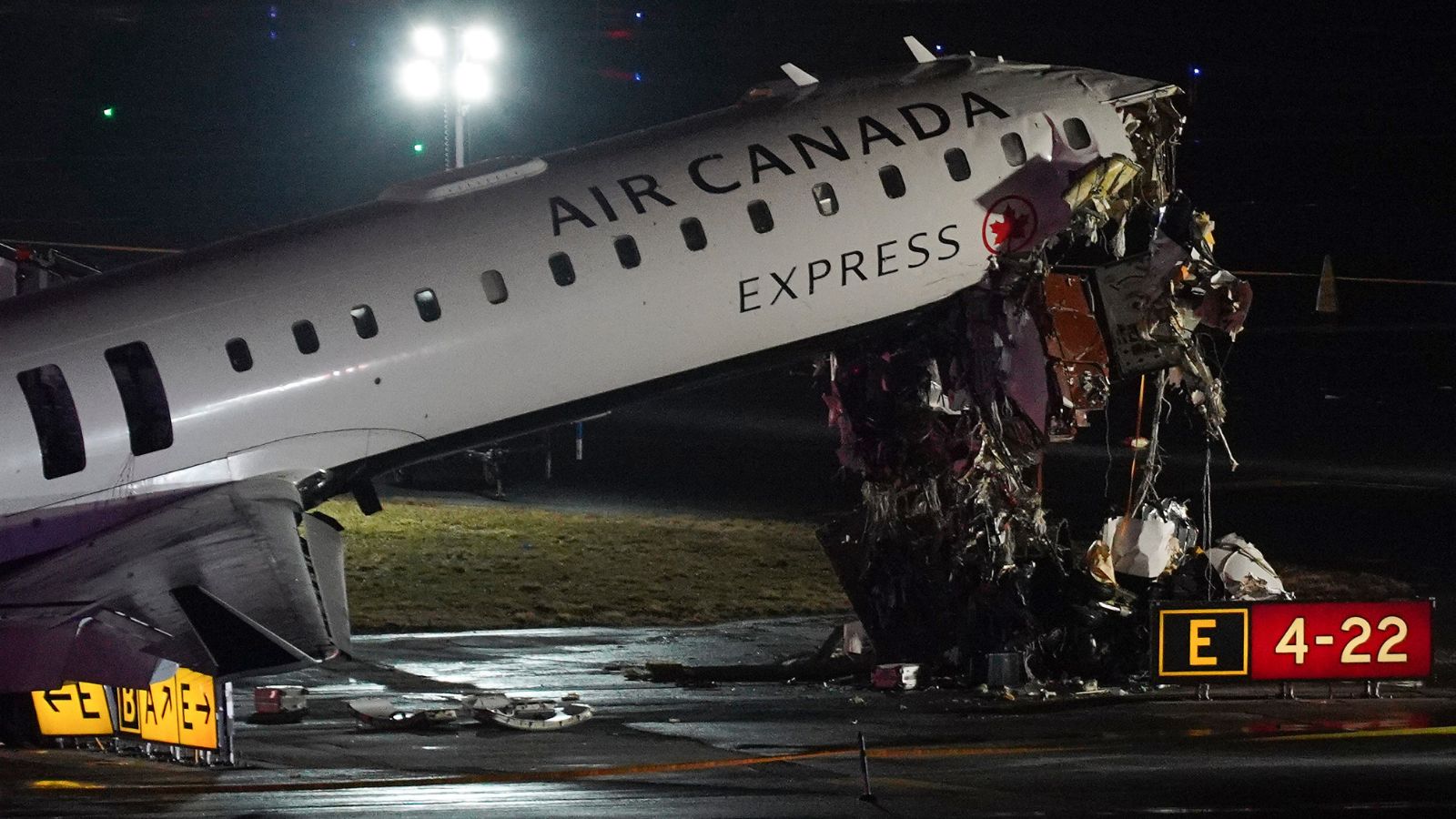
If you're planning to fly through New York City this week, I've got some bad news. The fallout from Sunday night’s fatal collision at LaGuardia Airport isn't going away anytime soon. While the airport technically reopened Monday afternoon, don't let that fool you into thinking things are back to normal. One of the two main runways, Runway 4/22, is a total crime scene right now, and the NTSB says it’ll likely stay closed through Friday, March 28.
This isn't just a minor "technical difficulty." We’re talking about a massive investigation into how an Air Canada Express CRJ-900, carrying 72 passengers from Montreal, slammed into a Port Authority fire truck at high speed. The crash killed both pilots—Antoine Forest and Mackenzie Gunther—and sent 41 people to the hospital. When a runway becomes a site for a federal death investigation, you don't just sweep up the glass and start landing planes again. Meanwhile, you can explore similar events here: Your Frequent Flyer Miles Are Liability Not Loyalty.
The reality for travelers is a logistical nightmare. LaGuardia is essentially operating at 50% capacity because it’s down to a single runway. As of Tuesday, average arrival delays have already ballooned to nearly five hours. Some unlucky passengers are seeing wait times north of seven hours.
The Single Runway Bottleneck
LaGuardia has always been the "problem child" of New York airports because of its cramped footprint and limited runway space. Taking one runway out of the equation is like trying to empty a stadium through a single side door. It doesn't work. To explore the full picture, check out the recent article by Condé Nast Traveler.
The FAA has already triggered a Ground Delay Program to manage the chaos. This means if you're sitting in Chicago or Atlanta waiting for a flight to LGA, your plane might not even leave the gate because there's literally no room for it to land in Queens. Delta Air Lines, which uses LaGuardia as a major hub, has already canceled hundreds of flights. They’re trying to move people to JFK or Newark, but those airports are already feeling the secondary pressure.
What Actually Happened on Runway 4
The details coming out of the investigation are chilling. Around 11:45 p.m. on Sunday, the Air Canada flight was touching down. At the same time, a convoy of fire trucks was rushing to help a United Airlines plane that had reported a weird smell on board.
Audio from LiveATC reveals a panicked air traffic controller screaming, "Stop, Truck 1! Stop!" followed by a gut-wrenching admission moments later: "I messed up." It looks like a classic runway incursion—a fancy way of saying two things were told they could be in the same place at the same time when they absolutely shouldn't have been.
NTSB Chair Jennifer Homendy described a "tremendous amount of debris" scattered across the tarmac. Investigators had to cut a hole in the roof of the mangled plane just to get the black boxes out because the tail was pinned to the ground. They aren't just looking at the wreckage; they’re looking at why the system failed.
Why the Delays Will Persist
You might wonder why they can't just tow the plane away and get moving. It's not that simple.
- Evidence Collection: Every piece of debris, from a twisted landing gear to a shard of the fire truck’s bumper, has to be mapped and documented.
- Runway Damage: A high-speed collision and a flipping fire truck can gouge the asphalt or damage the lighting systems. The Port Authority has to inspect every inch before a 50-ton jet can land on it.
- Hazardous Materials: Jet fuel and hydraulic fluid spills require professional cleanup crews to ensure the surface isn't slick or compromised.
- Staffing Strain: Air traffic controllers are already overworked. Dealing with a fatal accident while managing a single-runway operation adds a layer of stress that naturally slows down the pace of "business as usual."
How to Handle Your Travel This Week
If you have a flight scheduled, stop checking the "Status" on the airport monitors and start looking at your airline's app. If your flight is canceled, don't bother trekking to the airport to stand in a three-hour line at the customer service desk. You’ll get faster results through the app or by calling the airline's international support lines (sometimes the Canadian or UK lines have shorter wait times).
Basically, if you can avoid LGA until Saturday, do it. Rebook through JFK or Newark, or take the Amtrak. Even if your flight is "on time," the knock-on effects of a single-runway operation mean you’re likely to spend hours sitting on the tarmac waiting for a departure slot.
Check your carrier’s travel waiver. Most airlines are allowing free changes for flights through March 28 due to the "emergency operations" at LGA. If you're flying Delta or American, look for the "Change Flight" button in your app before you even leave for the airport.
The investigation is just getting started, but the gridlock is already here. Pack some extra patience or, better yet, a train ticket.