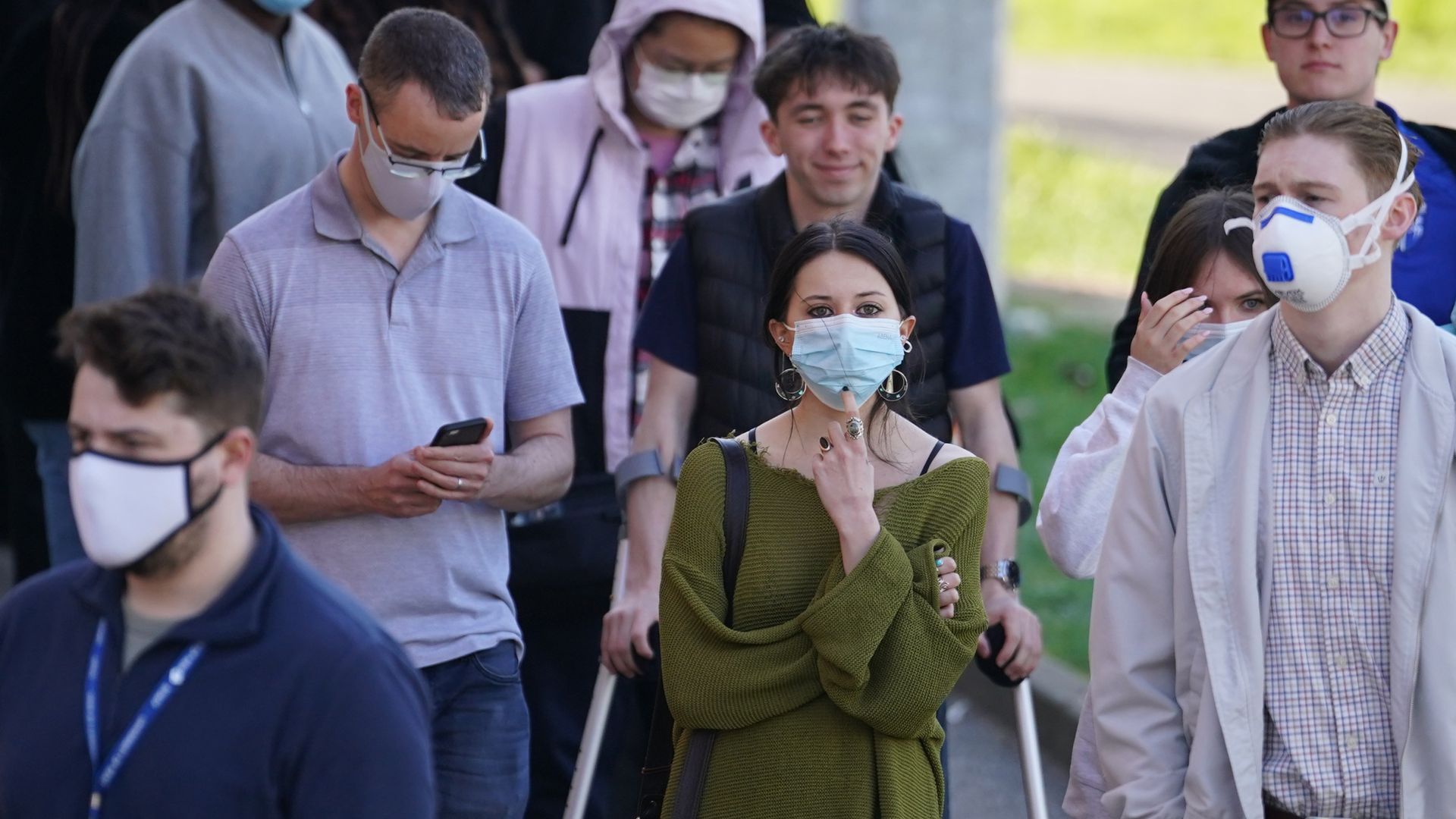
The local news is bleeding hearts over a hundred students being turned away from a meningitis vaccination center. The cameras capture the frustration. The parents vent about "failed logistics." The university issues a dry apology. Everyone treats this like a freak weather event—a temporary glitch in an otherwise perfect system.
They are looking at the wrong map.
The outrage shouldn’t be directed at the clinic door that didn't open. It should be directed at a fragile, high-margin immunization architecture that prioritizes "just-in-time" delivery over public safety. We have built a healthcare delivery system that operates with the same razor-thin inventory margins as a fast-fashion retailer. When a surge hits, the system doesn't just bend. It snaps.
The Myth of the Unforeseen Surge
Every time a meningitis cluster appears on a campus, health officials act like they’ve been struck by lightning. This is statistically illiterate. Meningitis B outbreaks on college campuses are not "black swan" events; they are predictable cyclical occurrences.
When a clinic runs out of doses in two hours, it isn't a "logistical hiccup." It is a deliberate choice by administrators and distributors to minimize carrying costs. Keeping a surplus of Neisseria meningitidis vaccines on hand is expensive. They have short shelf lives and require strict "cold chain" maintenance—staying between 2°C and 8°C.
I’ve sat in rooms where "efficiency experts" cut vaccine orders to the bone to ensure no dose goes unused. They would rather turn away fifty students than waste five doses. They are optimizing for the balance sheet, not the outbreak. When you see a "closed" sign at a clinic, you aren't seeing a failure of planning. You are seeing the success of a cost-cutting strategy that treats life-saving medicine like a perishable grocery item.
Why Herd Immunity is a Convenient Shield for Shortages
Public health messaging loves the phrase "herd immunity." It’s a great way to make individuals feel responsible for the collective. But in the context of meningitis, it’s often used to mask the fact that we don't have enough shots for the actual herd.
Meningitis is a low-incidence, high-consequence disease. Unlike the flu, where you want 70% of the population jabbed to slow the spread, meningitis strikes in sharp, localized bursts. If you are the student in the dorm where a case is confirmed, "herd immunity" is a theoretical comfort that offers zero biological protection. You need the antibody response. Period.
The "People Also Ask" crowd wants to know: "Can I wait a week for the next shipment?"
The honest, brutal answer? Maybe. But the incubation period for Meningitis B is typically three to four days. If you were exposed on Friday and the clinic tells you to come back next Thursday because they "underestimated demand," the window for prophylaxis hasn't just closed—it has vanished.
The Oligopoly Problem
We have a massive bottleneck at the top. The global vaccine market is dominated by a handful of players—GlaxoSmithKline, Sanofi, and Pfizer. When a local clinic runs dry, they blame "the supplier."
What they won't tell you is that these suppliers have zero incentive to overproduce. Overproduction kills their pricing power. We have allowed the production of life-saving biologics to become an oligopoly where scarcity is a feature, not a bug.
If we wanted to solve this, we would treat vaccine manufacturing like a strategic defense asset. We don't ask if we have "too many" fighter jets sitting in a hangar during peacetime. We maintain a surplus because the cost of being caught without them is total. Yet, in healthcare, we treat a surplus as a "waste of taxpayer funds."
The False Security of the Appointment System
Most clinics now rely on digital booking. It looks organized. It feels professional. In reality, it’s a way to manage PR, not health.
When a university says, "Register for your slot," they are essentially capping the number of people who can even try to get protected. It hides the true demand. If 5,000 students need a shot and the portal only shows 500 slots, the other 4,500 don't exist in the data. They just stay home, unprotected and uncounted.
I’ve worked with data sets from urban health centers where the "demand met" was reported as 100%. Why? Because they only counted the people who managed to navigate a broken booking site. They ignored the thousands who gave up. We are using technology to sanitize the reality of scarcity.
Stop Blaming the Nurses
The frontline staff at these centers are the ones taking the heat. They are the ones being yelled at by panicked parents. This is a classic diversion.
The decision to under-order is made in wood-paneled offices by people who will never have to look a student in the eye and say, "We don't have enough for you." If you want to fix the "turned away" problem, stop sending angry emails to the clinic manager. Start demanding transparency on the procurement contracts between the state and the pharmaceutical giants.
Ask these questions:
- What was the exact "buffer stock" mandated for this season?
- What is the penalty for the distributor if they fail to meet a 24-hour emergency restock request?
- Why are we paying premium prices for a "just-in-time" delivery model that fails the moment it's actually needed?
The Dangerous Nuance of "Low Risk"
When clinics run out, the secondary narrative is always: "Don't worry, the overall risk is low."
This is a gaslighting tactic. Risk is not a flat line. If you are a 19-year-old living in a crowded dormitory, your risk profile is radically different from the general population. Telling a student in a high-risk environment that "statistically, you'll probably be fine" while they stand in front of a locked clinic door is an abdication of duty.
The "low risk" argument is the fallback position for failed administrators. It’s a way to de-escalate the urgency they failed to meet. It’s also medically irresponsible. Meningitis can kill a healthy teenager in less than 24 hours. "Low risk" doesn't mean "no risk," and it certainly isn't an excuse for an empty fridge.
The Actionable Pivot
Stop waiting for the system to care about your individual safety. If you are in a "turned away" scenario, you have to break the local loop.
- Go Out of Network: Local campus clinics are the first to run dry because they are the most obvious. Check rural pharmacies thirty miles away. They often have stock that sits unused because their demographic isn't the primary target for these outbreaks.
- Demand the "Prescription Only" Route: Most people wait for the public clinic. If you have private insurance, get a specific prescription from your doctor and force a private pharmacy to order it via their separate commercial channel.
- Expose the Numbers: If you are turned away, don't just leave. Document it. If a hundred people are turned away, that is a data point the university will try to bury. Post the "closed" sign. Tag the board of trustees.
We have to stop accepting "supply chain issues" as a valid excuse for leaving people vulnerable to a preventable, lethal disease. The supply chain is a choice. The inventory level is a choice. The "closed" sign is a choice.
Demand to see the ledger where your safety was traded for a more efficient quarterly report.
The system isn't broken. It's working exactly as intended—to minimize cost at the expense of your access.
Go find a clinic that hasn't learned how to be "efficient" yet.