The death of an eighteen-year-old student from meningitis is not a freak medical accident. It is a systemic failure. When a grieving father speaks of "immeasurable devastation" after losing a child to a preventable bacterial infection, he is describing the wreckage left behind by a public health strategy that has grown complacent. We are currently witnessing a dangerous intersection of waning immunity, low diagnostic awareness, and a post-pandemic shift in how young adults interact, creating a perfect storm for Neisseria meningitidis to thrive.
Meningitis remains one of the most aggressive threats to the university population. It moves with a speed that defies modern clinical expectations, often progressing from a mild "fresher's flu" to multi-organ failure and brain damage within twelve to twenty-four hours. While public health officials often focus on the emotional weight of these tragedies, the hard-nosed reality is that many of these deaths are the result of a specific gap in the MenACWY and MenB vaccination rollout. We are losing students because the system assumes they are protected when, in many cases, they are not.
The Brutal Timeline of Bacterial Invasion
To understand why this continues to happen, you have to look at the biology of the attack. Bacterial meningitis is an inflammation of the protective membranes covering the brain and spinal cord. The bacteria typically colonize the back of the throat. In most people, they sit there harmlessly. But in a small percentage of the population—particularly those with immune systems stressed by the lack of sleep, poor nutrition, and crowded living conditions typical of first-year university life—the bacteria breach the mucosal barrier and enter the bloodstream.
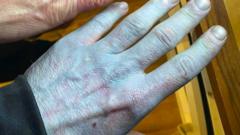
Once in the blood, the bacteria multiply at an exponential rate. They release toxins that damage blood vessels and cause internal bleeding, which manifests as the famous "glass test" rash. The problem is that the rash is a late-stage symptom. By the time a student or a worried roommate sees purple spots, the patient is often already in septic shock.
The early symptoms are indistinguishable from a common hangover or a standard viral infection. We are talking about a headache, a slight fever, and muscle aches. In a dorm room setting, the natural instinct is to "sleep it off." For a meningitis patient, sleeping it off is a death sentence. The clinical window for effective antibiotic intervention is incredibly narrow. If treatment doesn't start within the first few hours of the fever's onset, the chances of survival without permanent disability—such as limb amputation or hearing loss—plummet.
The False Security of the MenACWY Shield
The most significant oversight in the current health narrative is the assumption that the standard school-age vaccination program covers all bases. Most students entering higher education have received the MenACWY vaccine in their early teens. This vaccine is highly effective against the A, C, W, and Y strains of the bacteria. However, it provides zero protection against Meningococcal Group B (MenB), which is currently the leading cause of bacterial meningitis in the Western world.
In many regions, the MenB vaccine is not part of the routine adolescent booster schedule. It is often reserved for infants. This leaves a massive cohort of eighteen-to-twenty-one-year-olds—the highest risk group outside of toddlers—completely exposed to the B strain. This isn't just a lapse in policy; it’s a failure of communication. Parents send their children to college believing they are "fully vaccinated" because they followed the government's prescribed schedule, unaware that the most prevalent threat on campus wasn't on that list.
This gap creates a dangerous "immunity vacuum." As we have seen in recent clusters across various campuses, the B strain can circulate rapidly through social contact. Sharing drinks, cigarettes, or even just living in close quarters allows the bacteria to jump from host to host until it finds a vulnerable target.
The Social Cost of Diagnostic Delay
The industry-wide failure to educate students on the "non-classic" symptoms is another factor in this crisis. Everyone knows about the stiff neck. Everyone knows about the light sensitivity. But recent data suggests that in young adults, the initial presentation is frequently intense leg pain and cold hands and feet despite a high fever.
These are the symptoms of early-stage sepsis. When the body realizes it is under a massive bacterial assault, it begins to pull blood away from the extremities to protect the core organs. If a student complains that their legs hurt too much to walk, they are not just tired; they are potentially hours away from collapse.
Current campus health protocols are often too reactive. We see a flurry of activity—leaflets, emails, and memorial services—after a student dies. A proactive investigative approach reveals that the infrastructure for rapid, on-site testing and immediate isolation is woefully inadequate in most student housing complexes. The burden of diagnosis is placed on the shoulders of nineteen-year-olds who are ill-equipped to distinguish between a heavy night out and a lethal infection.
Resistance and the Future of Treatment
Beyond the immediate tragedy of individual loss, there is a looming shadow over how we treat this disease. We are starting to see the emergence of antibiotic-resistant strains of Neisseria meningitidis. While penicillin and third-generation cephalosporins remain the gold standard, the efficacy of these drugs is not guaranteed forever.
The medical community is currently debating the necessity of universal MenB vaccination for all school-leavers. The counter-argument is always one of cost-effectiveness. Health economists weigh the price of the vaccine against the statistical likelihood of an outbreak. But this clinical coldness ignores the "immeasurable" cost mentioned by the families left behind. It ignores the cost of a life that had sixty years of potential ahead of it.
We also have to contend with the "post-lockdown" immune profile. For two years, the natural circulation of many bacteria was suppressed. As social barriers dropped, these pathogens returned to a population that had not been exposed to the usual "background" levels of bacteria that help maintain community-level resistance. This has led to more aggressive outbreaks of various respiratory and blood-borne illnesses, with meningitis at the top of the danger list.
Rebuilding the Defense Perimeter
The solution requires more than just empathy for grieving parents. It requires a hard pivot in how universities and health departments manage the transition to higher education.
First, the MenB vaccine must be decoupled from "infant-only" status and integrated into the standard pre-university checklist. If a university requires a tuition deposit, they should also require proof of comprehensive meningitis coverage—strains A, C, W, Y, and B.
Second, we must strip away the focus on the rash. Public health campaigns need to hammer home the early signs of sepsis: the leg pain, the shivering, and the rapid heart rate. We need to empower students to act as "first responders" for their peers. If a roommate is acting confused or their condition is deteriorating rapidly, the instruction should not be "call the GP in the morning." It should be "get to an emergency room now."
The tragedy of an eighteen-year-old dying from meningitis is compounded by the fact that the tools to prevent it already exist in a vial. We have the science. We have the distribution networks. What we lack is the institutional will to update a vaccination schedule that was designed for a pre-MenB-dominant world.
The Accountability Gap
Universities often hide behind the "individual responsibility" of the student. They argue that they provide the information and it is up to the individual to seek out health services. This is a dereliction of duty. When an institution takes thousands of young people and places them in high-density housing, they assume a level of custodial care.
This care must include active surveillance and aggressive vaccination drives on site. Not just a link in an introductory email, but a physical presence on move-in day. The current model of "informed consent" is failing because the information is being drowned out by the noise of campus life.
We are seeing a pattern where the "unprecedented" nature of these deaths is used as an excuse for systemic inertia. There is nothing unprecedented about a bacterial outbreak in a dormitory. It is a known variable. It is a predictable risk. Treating it as a tragic lightning strike is a way for policymakers to avoid the uncomfortable conversation about funding a universal MenB rollout.
The devastation described by the families of these victims is the final result of a series of missed opportunities. It starts with a missed vaccine, continues with a missed symptom, and ends in an intensive care unit where the medicine simply cannot move fast enough to catch the bacteria.
Stop looking for a purple rash that may never appear. Ask the student if they can stand up. Check if their feet are ice cold while their forehead burns. If the answer is yes, you have a medical emergency that requires immediate intravenous antibiotics. Anything less is just waiting for the next headline.