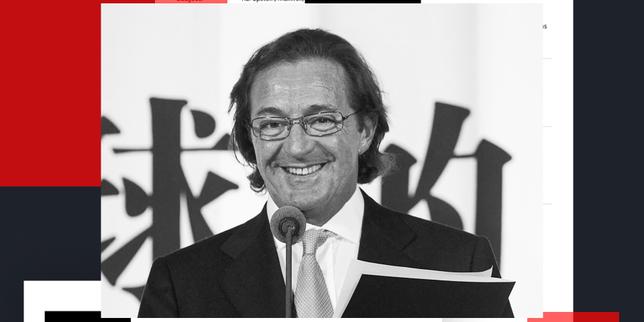
Richard Ford is a master of the sentence, but he is an amateur at the ballot box. When he claims that the "regime" in Washington is the primary rot in the American soul, he is doing what novelists do best: creating a compelling fiction to avoid a boring truth.
The literary establishment loves this narrative. It feels brave. It feels "urgent." It also happens to be entirely backwards. Changing the regime in Washington won't fix America because Washington is no longer the center of American power. It is merely the mirror of American dysfunction.
The Myth of the Top-Down Fix
For decades, we have been sold the lie that if we simply swap the occupants of the West Wing, the national psyche will heal. This is the "Great Man" theory of history repackaged for the 24-hour news cycle. Ford’s call for regime change assumes that the federal government is a cohesive engine that can be steered.
It isn't.
Washington is a sclerotic collection of legacy bureaucracies and interest groups that move with the speed of a glacier. Expecting a change in leadership to fundamentally alter the lived experience of a citizen in Montana or Maine is like expecting a new captain to turn the Titanic after it has already split in half. The power has drifted. It has moved to the algorithm, the local school board, and the private equity firms buying up the suburbs.
By focusing on the "regime," Ford ignores the reality that the most impactful decisions in 2026 aren't made in the Oval Office. They are made in the code of social media platforms that dictate how we process information and in the boardrooms of companies that control the supply chain.
The Comfortable Radicalism of the Writer
Writers like Ford occupy a privileged space. They can call for "urgent change" from the safety of a book tour. It’s a low-risk, high-reward posture. If you blame "Washington," you don't have to blame the neighbors. You don't have to blame the culture. You don't have to look at the fact that the "regime" is exactly what a polarized, consumer-driven electorate asked for.
I have spent years watching policy-making from the inside. The most dangerous misconception people have is that there is a "secret room" where the real decisions happen. There isn't. There is only a series of reactive choices made by terrified politicians who are following, not leading, the most vocal 10% of their base.
Ford suggests the regime is the problem. I suggest the problem is a citizenry that has outsourced its agency to a federal government it claims to despise.
The Nuance of Real Power
Let’s look at the data. If you track the legislative output of the last three administrations, the common thread isn't "regime" ideology. It is pragmatism masked as extremism. We see a consistent expansion of the debt, a consistent focus on geopolitical containment, and a consistent failure to address the housing crisis.
Why? Because those issues are "regime-proof."
They are structural.
If you want to disrupt the status quo, you don't look at the figurehead. You look at the incentives.
- The Fundraising Loop: Politicians spend 60% of their time asking for money. That is the regime.
- The Regulatory Moat: Large corporations write the rules that keep small competitors out. That is the regime.
- The Attention Economy: Conflict generates clicks; clicks generate revenue. That is the regime.
Changing the person at the top without changing these three pillars is just a rebranding exercise. It’s a new cover on a bad book.
The "Distant Washington" Fallacy
People often ask: "How do we get back to a functional government?"
The premise is flawed. "Functional government" is a historical outlier, not the norm. The era of mid-century consensus that Ford likely misses was fueled by a post-war economic boom that we will never see again. We are living in a period of "mean reversion."
The "regime" isn't the cause of our bitterness; it is the outlet for it. When Ford calls for change in Washington, he is asking for a sedative. He wants a government that is quiet so he can go back to believing the American Dream is still a functioning hardware store in a small town.
But that America is gone. It was eaten by globalization, automation, and the digital divide. No "regime change" is going to bring back the 1950s economy or the 1990s social cohesion.
Stop Waiting for the Cavalry
The most counter-intuitive truth in modern politics is that the less you care about Washington, the more power you actually have.
I’ve seen activists spend five years trying to get a federal law passed, only to see it gutted by a mid-level staffer in an agency they’ve never heard of. Meanwhile, a group of locals in a mid-sized city can change zoning laws in eighteen months and fundamentally improve the lives of thousands.
The obsession with the "regime" is a form of procrastination. It allows us to feel engaged while remaining passive. It’s easier to tweet about the President than it is to fix the library budget in your own town.
The Risk of the "Great Reset"
There is a downside to my stance. If we ignore Washington entirely, we risk ceding the few levers of power that still matter—like the judicial system and the nuclear codes—to the most radical elements of society. I admit that. But the current path of placing all our hopes and fears in the federal government is a guaranteed recipe for perpetual disappointment.
Ford’s perspective is the "lazy consensus" of the intellectual class. It assumes that the center must hold. I am telling you the center has already vanished. We are a collection of 50 states and 330 million individuals who have more in common with our global digital tribes than our geographic neighbors.
Why the "Urgency" is a Distraction
Urgency is a marketing tactic. Whenever someone tells you something is "urgent" in politics, they are trying to sell you a simplified version of a complex problem.
- Is the debt urgent? Yes.
- Is climate change urgent? Yes.
- Is the "regime" urgent? No.
The regime is a symptom. Treating a symptom while the infection spreads is not "urgent" action; it is medical malpractice. We don't need a new "regime" in Washington. We need a new definition of what it means to be a citizen in a post-geographic world.
Stop looking at the White House. Look at your own backyard. If you want to change the country, start by making Washington irrelevant to your daily survival. Build local networks. Invest in local infrastructure. Create communities that can withstand the inevitable incompetence of whoever sits in the Oval Office.
The greatest threat to the status quo isn't a different president. It's a population that no longer looks to the president for permission to thrive.
Build something that doesn't require a federal permit to exist. That is the only regime change that matters.