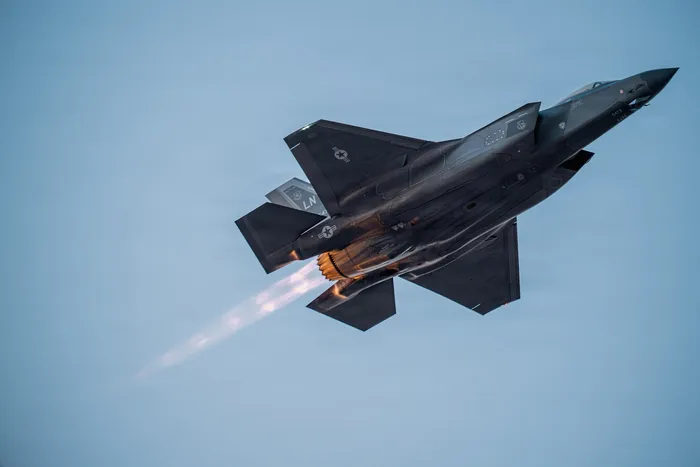
The invincibility of stealth just hit a massive reality check. Reports of a US F-35 stealth fighter sustaining damage during a combat mission over Iranian airspace have sent shockwaves through the defense community. For years, we've been told these jets are ghosts in the sky. They aren't. This incident proves that even the most expensive weapon system in history has a breaking point when it flies into high-end integrated air defense networks.
If you've been following the tension in the Middle East, you know the stakes couldn't be higher. This isn't just about one plane. It's about whether the trillion-dollar bet the Pentagon made on stealth technology is actually going to pay off when the shooting starts for real. Iran has spent decades preparing for exactly this kind of fight. They aren't using rusted Cold War relics anymore. They've built a multi-layered defense system that's designed specifically to find the "invisible."
What Actually Happened in the Skies Over Iran
Details remain tightly guarded, but the core of the story is clear. A Lockheed Martin F-35 Lightning II was conducting a mission—likely intelligence gathering or a pre-emptive strike on radar installations—when it encountered an unexpected level of resistance. We aren't talking about a lucky shot from an AK-47. The damage appears to have been caused by either a close-proximity detonation from a surface-to-air missile (SAM) or sophisticated electronic warfare that forced the pilot into a kinetic "kinetic event."
The jet made it back to a friendly base, which speaks to its durability. However, the "stealth" part of the aircraft is notoriously delicate. The Radar Absorbent Material (RAM) that coats the skin of the F-35 is what makes it a ninja. Even a small amount of shrapnel or heat damage can ruin that signature. Once the skin is compromised, the jet glows like a lightbulb on enemy radar.
The Iranian Defensive Evolution
Don't underestimate the Iranian military. It’s a common mistake. While they might not have a fleet of fifth-generation fighters, their ground-based defenses are formidable. They’ve been buying and reverse-engineering tech for years. The Bavar-373, for instance, is their homegrown answer to the Russian S-300. It's designed to track dozens of targets simultaneously, including low-observable aircraft like the F-35.
They use "passive radar" systems. Instead of sending out a big "here I am" signal that a stealth jet can detect and avoid, passive radar just listens. It looks for the disturbances an aircraft makes in the ambient radio waves already in the air—like cellular signals or radio broadcasts. It's like seeing a bird fly through a cloud of smoke. You don't see the bird; you see the hole it leaves behind. This is likely how they managed to put a missile close enough to the F-35 to cause damage.
The Problem With Relying on a Single Solution
The F-35 is a miracle of engineering, but it’s been plagued by "concurrency" issues since day one. That’s a fancy way of saying they started building it before they finished designing it. This mission over Iran highlights the danger of putting all our eggs in the stealth basket.
- Maintenance Nightmares: Fixing a damaged F-35 isn't like patching a hole in an F-16. You have to reapplied the RAM in a controlled environment. It's slow. It's expensive.
- The Cost of a Scratch: A single mission that results in even minor damage can sideline a jet for weeks. In a high-intensity conflict, we can't afford that kind of downtime.
- Signal Evolution: The moment a stealth jet is tagged by radar, the enemy gathers data. They learn how to see it better next time.
The US Air Force has always maintained that the F-35 is the "quarterback" of the sky. It's supposed to stay hidden, gather data, and tell everyone else where to shoot. But if the quarterback is getting sacked behind the line of scrimmage, the whole playbook falls apart.
What the Pentagon Isn't Saying
Official statements are usually a mix of "the pilot is safe" and "mission objectives were met." They won't admit the F-35 was vulnerable. Why? Because the F-35 program is the backbone of NATO's future air power. If the world thinks it can be hit by Iranian-made missiles, orders might dry up. Allies might start looking at cheaper, more numerous drones instead.
There's also the electronic warfare (EW) angle. Iran has become incredibly proficient at GPS jamming and spoofing. It's possible the F-35 wasn't hit by a missile at all, but rather suffered a flight control malfunction due to intense EW interference. If an enemy can "hack" the air around a jet, stealth doesn't matter. The sensors start lying to the pilot, and that's when accidents happen.
Comparing This to Past Stealth Losses
Think back to 1999. An American F-117 Nighthawk was shot down over Serbia. People were stunned. It turned out the Serbians had modified old Soviet radar to track the jet's "shape" rather than its signal. They waited for the bomb bay doors to open—which momentarily increases the radar cross-section—and they fired.
The Iran incident feels like a modern version of that. It’s a reminder that no technology stays dominant forever. The cat-and-mouse game between stealth and detection is leaning toward detection right now. This is a wake-up call for the US Navy and Air Force to stop assuming they own the sky.
The Immediate Fallout for Regional Strategy
Expect the US to change its flight patterns immediately. You won't see F-35s flying solo missions deep into contested territory for a while. They'll likely start flying with "loyal wingman" drones—unmanned aircraft designed to soak up missiles and distract radar so the expensive manned jet stays safe.
This incident also emboldens Iran. They'll use this for propaganda, claiming they've "broken the myth" of American air superiority. It might make them more aggressive in the Strait of Hormuz or in their support for proxy groups across the region. If they think they can hurt the crown jewel of the US military, they’ll be less afraid to push the envelope.
Moving Forward in a Post Stealth World
We need to stop talking about stealth as a "cloak of invisibility." It's more like a camouflage suit. If you stand still in the woods, it works. If you run through a brightly lit hallway, you're going to get spotted. The skies over Iran are that brightly lit hallway.
The focus needs to shift. We need more emphasis on long-range standoff weapons—missiles that can be fired from hundreds of miles away so the jet never has to enter the "red zone" of enemy SAMs. We also need to get serious about mass. Ten stealth jets are great, but a thousand cheap, smart drones might be better.
The damage to this F-35 is a pivot point. It's the end of the era where we could fly anywhere we wanted without consequences. From now on, every mission over a country like Iran or China is a coin flip.
If you're tracking defense spending or geopolitical stability, keep an eye on how the US responds to this repair bill. If they start asking for more money for "electronic protection" upgrades, you'll know exactly how worried they really are. Check the latest updates from the Department of Defense and look for changes in the F-35 Block 4 upgrade schedule. That’s where the real fixes will happen.