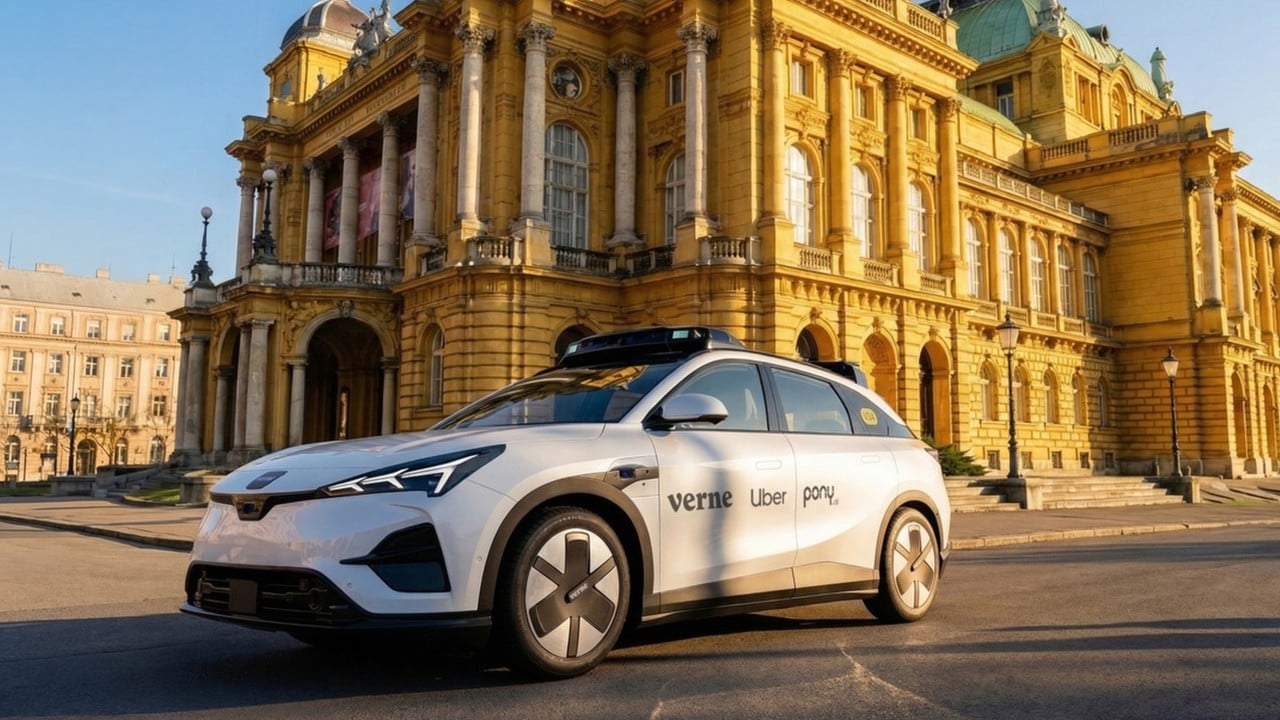
Pony AI just made a move that should make every European automaker lose a little sleep tonight. The Chinese autonomous driving powerhouse isn't just testing the waters anymore. They’re diving headfirst into the European market through a massive partnership with Uber and a local startup called Nextmotive. This isn't some tiny pilot program in a closed-off parking lot. It’s a full-scale intent to dominate the ride-hailing space before the local brands even get their autonomous software out of the garage.
Honestly, the speed of this expansion is what's truly staggering. While Western manufacturers are busy arguing over LiDAR sensor costs or pushing back their "fully autonomous" release dates, Pony AI is already hauling passengers in Beijing and Guangzhou. Now, they’re bringing that hard-earned data and refined software to European roads. You’re looking at a collision between Silicon Valley's biggest platform, China’s most advanced self-driving tech, and a European startup that knows the local regulatory minefields. It’s a triple threat that most people didn’t see coming. Recently making headlines lately: The Polymer Entropy Crisis Systems Analysis of the Global Plastic Lifecycle.
The Strategy Behind the Pony AI and Uber Alliance
Uber's role here is the real kicker. They’ve basically become the kingmaker for autonomous vehicle (AV) companies. Instead of trying to build their own cars—which was a disaster that cost them billions—they’re now the gatekeeper for the world’s largest passenger network. By plugging Pony AI into the Uber app, they’re giving a Chinese company an instant, massive customer base the second the wheels touch European soil.
This partnership solves the biggest problem every robotaxi company faces. You can have the smartest car on Earth, but if nobody knows how to book it, you’re just owning a very expensive paperweight. Uber provides the "where" and "who," while Pony AI provides the "how." It’s a lean, mean approach to global scaling. They don’t need to build a brand from scratch in Germany or France. They just need to show up in the app you already have on your phone. More details on this are covered by The Verge.
Nextmotive and the Local Advantage
You can't just drop a self-driving car into Luxembourg or Berlin and expect it to work. The signs are different. The cyclists are everywhere. The weather is, frankly, miserable half the time. That’s where Nextmotive comes in. This local startup acts as the bridge. They know the specific nuances of European traffic laws and the bureaucratic hurdles of the European Union’s safety standards.
Nextmotive provides the operational muscle. They handle the fleet management, the maintenance, and the legal compliance that would take a foreign company years to figure out alone. It’s a smart play by Pony AI. They aren't trying to be the hero who does everything. They’re playing the role of the specialized tech provider, letting the locals handle the ground game.
Why Europe is the New Autonomous Battleground
For a long time, the robotaxi wars were fought in Phoenix, San Francisco, and a few select cities in China. Europe was often viewed as "too difficult" because of its narrow streets and strict privacy laws. But things changed. The European Union has been quietly building a regulatory framework that, while tough, actually provides a clear roadmap for how to get these cars on the road legally.
- Strict but Clear Rules: Unlike the patchwork of laws in the US, the EU is aiming for more unified standards.
- Urban Density: European cities are built for transit, not necessarily for giant SUVs. Small, efficient robotaxis fit perfectly here.
- High Costs of Ownership: Fuel and parking are a nightmare in Europe. A reliable, affordable robotaxi service isn't just a luxury; it's a necessity for people living in city centers.
Pony AI is betting that their tech is adaptable enough to handle the transition from the wide boulevards of Nansha to the cobblestone streets of Europe. They’ve already clocked millions of miles in diverse conditions. If their software can handle the chaotic, high-density traffic of a Tier-1 Chinese city, a European suburb might actually feel like a vacation for the AI.
The Real Numbers Driving This Expansion
Pony AI isn't some fly-by-night operation. They recently went public on the Nasdaq, raising over $260 million. They’ve got the cash. They’ve got the hardware. As of late 2025, they were operating hundreds of vehicles across China. We’re talking about a company that has already moved past the "can we do this?" phase and into the "how many can we build?" phase.
The partnership with Uber is likely to start in specific, tech-friendly European hubs. Think places like Luxembourg, where Nextmotive has deep roots, or parts of Germany where the government is desperate to show they aren't falling behind in the tech race. By the time 2027 rolls around, seeing a Pony AI-branded vehicle with an Uber sticker in a major European capital won't be a novelty. It'll be the standard.
What This Means for Local Automakers
If I were a CEO at a major European car brand, I’d be sweating. For years, the narrative was that autonomous driving was always "five years away." Well, five years ago was 2021, and here we are. Pony AI is proving that the tech is ready now. By partnering with Uber, they’re bypassing the traditional dealership model and going straight to the consumer.
Most traditional car companies are still trying to sell you a vehicle that you drive. Pony AI and Uber are selling you a service where you don't have to drive at all. It’s a fundamental shift in how we think about mobility. If European brands don't speed up their software development or start making their own alliances, they risk becoming nothing more than "hardware providers" for the companies that actually own the AI and the customer relationship.
Addressing the Privacy Elephant in the Room
European regulators are obsessed with data privacy—and rightly so. A robotaxi is basically a rolling camera rig. It sees everything. Pony AI and Uber will have to be incredibly transparent about where that data goes. Will it stay on European servers? Who has access to the sensor feeds? These aren't just technical questions; they're political ones.
The involvement of Nextmotive is likely a strategic shield here. By having a European entity involved in the operations, they can ensure that data handling stays within the boundaries of GDPR. If they mess this up, the regulators will shut them down faster than you can say "Level 4 autonomy." But if they get it right, they set the gold standard for how foreign tech companies should operate in the EU.
How to Prepare for the Robotaxi Shift
You don't need to wait for the car to show up at your door to understand the impact. The business model is changing. We're moving away from individual ownership toward mobility-as-a-service (MaaS). If you're an investor, look at the companies providing the sensors and the mapping data. If you're a city planner, start thinking about what happens to all those parking garages when people stop owning cars and start sharing autonomous ones.
Don't buy into the hype that this will happen overnight everywhere. It'll be a slow rollout, city by city, street by street. But the momentum is undeniable. Pony AI has the technical lead, Uber has the platform, and Europe has the demand. It’s a perfect storm.
Watch the regulatory filings in Luxembourg and Germany over the next six months. That’s where the first real movements will happen. If you see Pony AI vehicles starting "mapping runs," you know the service launch isn't far behind. The era of the European robotaxi isn't coming. It's already at the door.