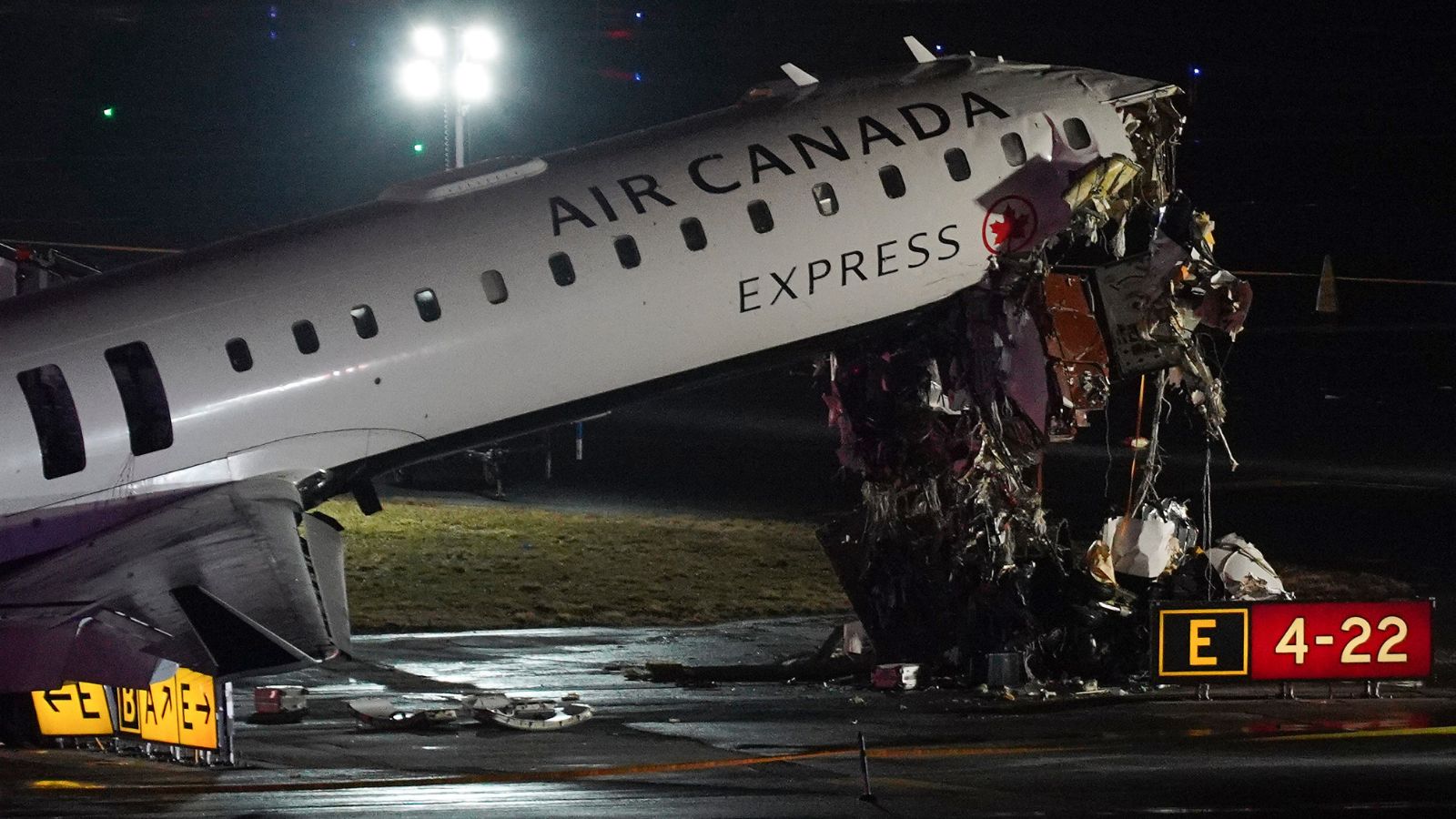
The transition from a controlled cabin environment to an emergency egress scenario represents a total system breakdown where human psychology overrides technical protocols. On March 3, 2026, Air Canada Flight 623, an Airbus A320 destined for Toronto, experienced a dual-engine flameout shortly after takeoff from Halifax Stanfield International Airport. While the flight crew successfully executed an emergency landing, the subsequent "uncommanded evacuation"—where passengers initiated their own exit—reveals a critical misalignment between aviation safety engineering and the behavioral reality of high-stress kinetic events.
The Mechanics of an Uncommanded Evacuation
Aviation safety is predicated on the Command-Response Loop. In a standard emergency, the pilot assesses the external environment (fire, structural integrity, fuel leaks) before issuing an evacuation order. This ensures passengers do not exit into a more hazardous environment than the cabin itself, such as an active engine fire or oncoming emergency vehicles.
When passengers "tore open" the emergency exits on Flight 623, they bypassed this loop, creating three distinct operational hazards:
- Aero-Engine Suction/Exhaust Risks: Even after a flameout, turbines may continue to "windmill" or retain enough heat to cause flash fires if fuel lines are compromised. By exiting without clearance, passengers risked entering a thermal or mechanical kill zone.
- Slide Deployment Asymmetry: Emergency slides are ballistic devices. If an exit is opened while the aircraft is still in motion or before the slides are armed, the system may fail or deploy at an angle that causes secondary injuries.
- Structural Elevation Hazards: Jumping from the wing of an A320 involves a vertical drop of approximately $3.5$ to $4$ meters depending on the landing gear state. Without a deployed slide, the kinetic energy upon impact often results in lower-limb fractures or spinal compression.
The Cognitive Friction of the "Silence Gap"
The primary driver of the Flight 623 unauthorized exit was the Information Vacuum. Post-impact or post-emergency landing, there is a period—often lasting 30 to 90 seconds—where the flight crew is busy completing "Shutdown Checklists" to secure the aircraft. To a passenger, this silence is interpreted as incapacitation or indecision.
In this environment, the Social Proof Phenomenon takes over. If one passenger perceives a threat (smoke, smell of fuel, or simply fear) and moves toward an exit, a "stampede threshold" is met. On Flight 623, the sight of sparks during the landing roll acted as the catalyst. Once the first over-wing exit was breached, the cognitive barrier to following suit vanished. This is not a failure of the passengers to follow rules, but a failure of the communication system to provide a "holding" status during the pilot’s high-workload phase.
Thermal Dynamics and the Perception of Threat
Air Canada passengers reported the "smell of burning" and "visible smoke." In aviation forensics, distinguishing between Passive Off-gassing and Active Combustion is vital for the crew, but impossible for the layperson.
- Passive Off-gassing: Occurs when hydraulic fluid or de-icing agents hit hot engine components. It creates dense, white smoke that is acrid but not immediately lethal.
- Active Combustion: Involves the aircraft interior (plastics, seat foam) or fuel. This produces hydrogen cyanide and carbon monoxide, leading to incapacitation within 90 seconds.
The passengers on Flight 623 acted on the assumption of active combustion. From a survivalist framework, their "irrational" behavior was a rational response to a perceived terminal threat. However, by jumping from the wings, they traded a statistical risk of smoke inhalation for a guaranteed risk of physical trauma.
The Architecture of the Exit Breach
Modern emergency exits are designed to be "plug doors." They use the pressure differential between the cabin and the outside air to stay sealed. At ground level, where the pressure is equalized, the only thing holding the door is a mechanical latch.
The report that passengers "tore" the doors open suggests two things:
- Adrenaline-Enhanced Torque: Under extreme stress, individuals can exert significantly higher force than during simulated drills.
- Mechanical Familiarity Gap: Most passengers have never operated a Type III over-wing exit. The weight of the hatch (typically around 15-20kg) often causes it to fall inward, pinning the person who opened it or blocking the row. On Flight 623, the chaotic egress over the wings indicates the hatches were successfully discarded, but the lack of guided direction led to the dangerous "jumping" behavior observed.
Quantifying the Injury Matrix
When an evacuation is unmanaged, the injury rate shifts from "zero-to-low" (standard slide use) to "moderate-to-severe." The variables involved in the Flight 623 wing-jumps can be modeled by the formula for kinetic energy:
$$E_k = \frac{1}{2}mv^2$$
Where $m$ is the passenger’s mass and $v$ is the velocity at impact. A $75$kg passenger jumping from a $3.5$-meter wing height hits the tarmac with a velocity of approximately $8.2$ m/s ($18.3$ mph). Without the deceleration provided by an inflatable slide, the force is absorbed entirely by the musculoskeletal system.
Reports from the Halifax incident confirm multiple ankle and knee injuries. These are not "accidents" in the traditional sense; they are the predictable outcome of using a non-standard egress route.
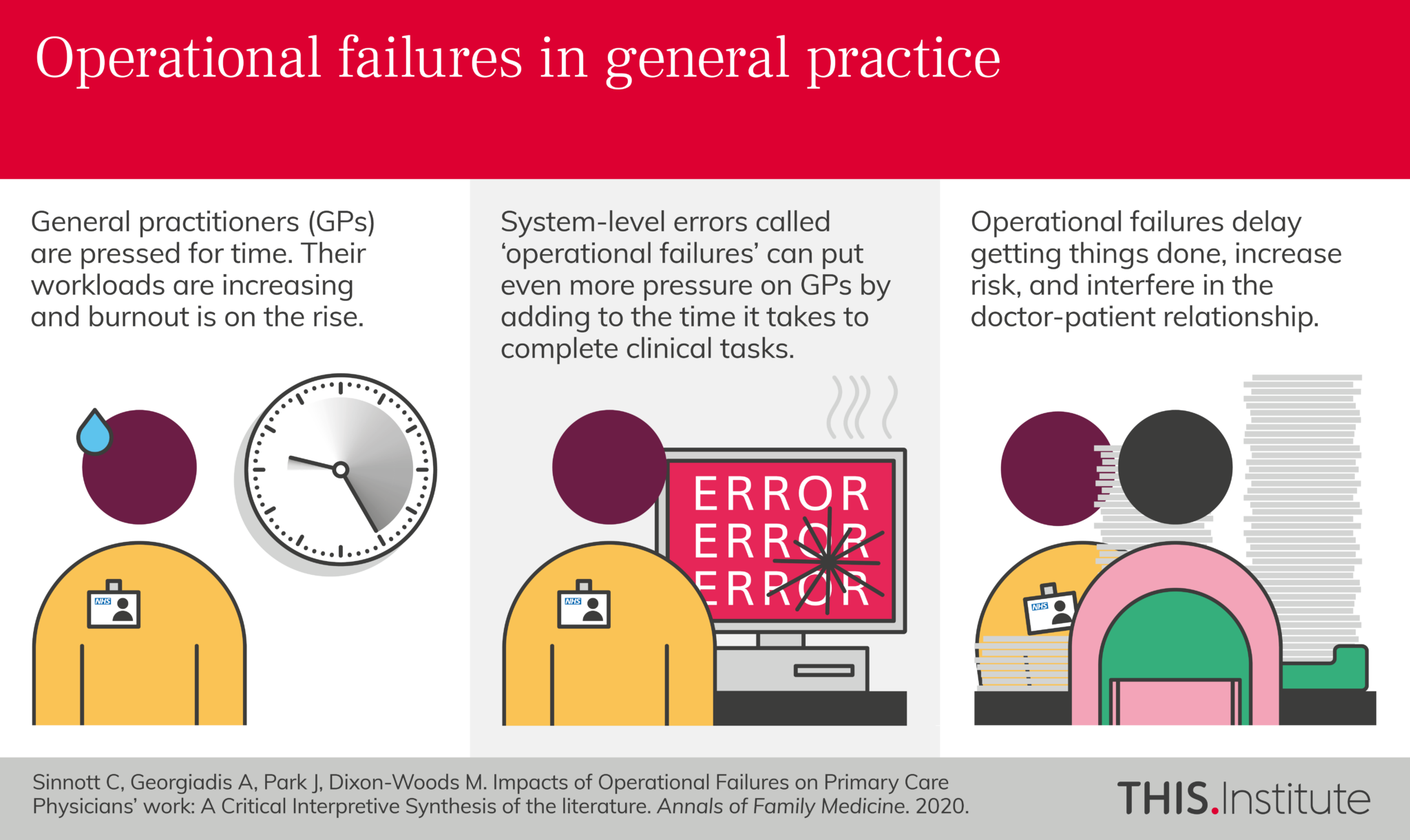
Operational Failures in Ground Coordination
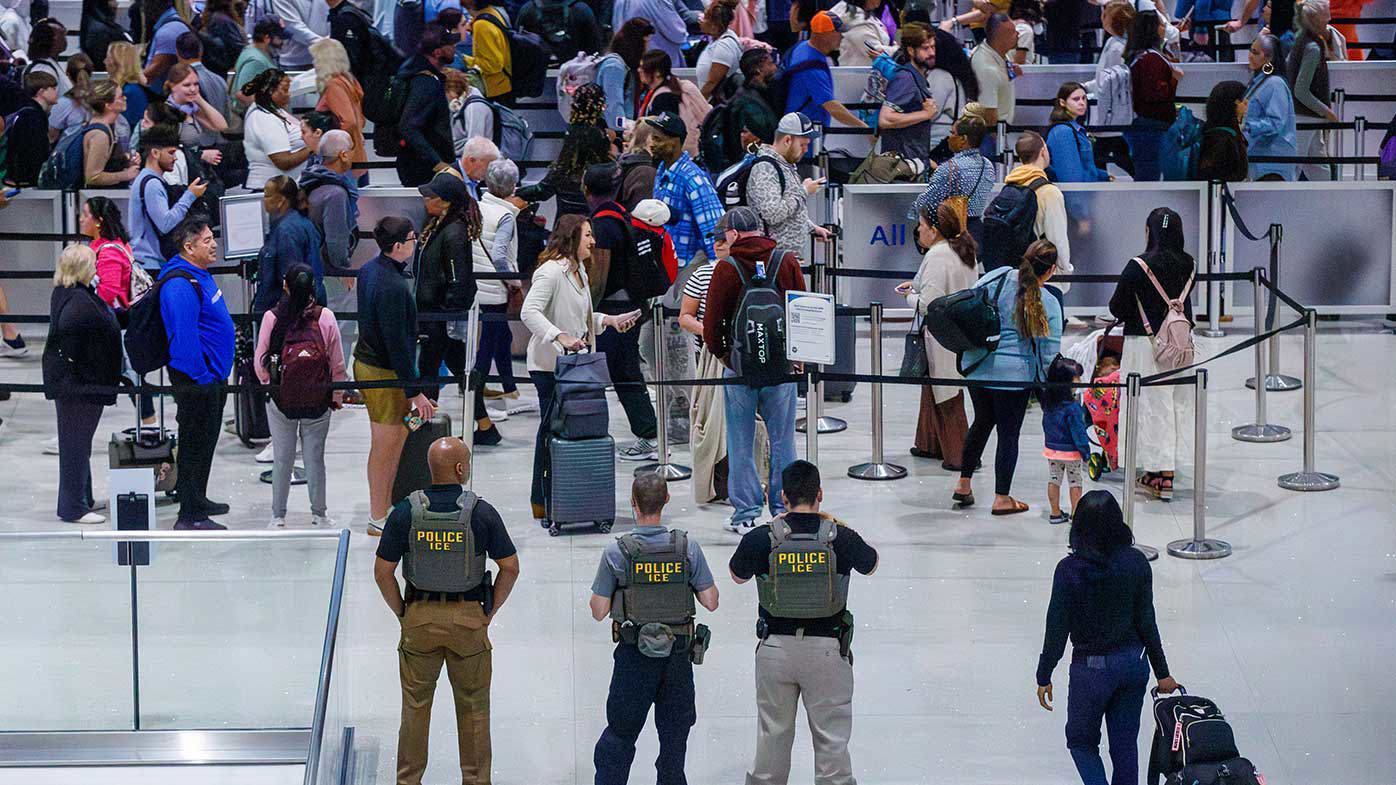
The secondary failure in the Air Canada incident occurred on the tarmac. Emergency responders are trained to manage a "controlled" evacuation at designated points. When passengers scatter across the airfield from wings and multiple points of the fuselage, they create a Target Rich, Data Poor environment for firefighters.
- Triage Dilution: Medics must search a wider radius to find injured passengers who may have crawled away from the airframe.
- FOD (Foreign Object Debris) Risk: Personal items dropped during a chaotic exit can be ingested by the engines of responding vehicles or other aircraft, potentially expanding the disaster zone.
- Accountability Gap: Cabin crews use "clickers" or headcounts at the base of the slides. When passengers jump off wings and run toward the terminal, the manifest reconciliation becomes impossible, leading to "false positives" for people trapped inside the burning hull.
The Strategy of the "Hardened Cabin"
To prevent a recurrence of the Flight 623 scenario, the aviation industry must move beyond the "Wait for Command" protocol, which is clearly failing under the pressure of real-world fear.
A Hardened Cabin Strategy would involve:
- Automated Status Lighting: Implementing a "Traffic Light" system at every exit. Green for "Safe to Open," Red for "Danger Outside," and Amber for "Crew Assessing." This replaces the "Silence Gap" with visual data.
- Haptic Exit Training: Enhancing the pre-flight briefing with a physical demonstration of the weight and movement of the over-wing hatch, reducing the "fumble time" and panic during a real event.
- Bifurcated Communication: A dedicated "Passenger Safety Officer" (separate from the pilots) whose sole job during a landing roll is to provide continuous, live verbal updates to the cabin, preventing the information vacuum from forming.
The Halifax incident serves as a definitive case study in the limits of passenger discipline. The assumption that a group of 150 untrained, terrified individuals will sit in a smoke-filled tube while the flight crew works through a technical checklist is an operational fallacy. Future safety protocols must be designed for the human as they are—prone to panic and driven by self-preservation—rather than the human as the airline wishes them to be.
Airlines must now treat the "uncommanded evacuation" not as a breach of protocol, but as a standard failure mode that requires its own set of automated technical interventions. The next generation of narrow-body aircraft must integrate sensors that lock or unlock exits based on external fire and engine status, removing the burden of life-or-death decision-making from both the panicked passenger and the overwhelmed pilot.
Would you like me to analyze the specific FAA and Transport Canada regulatory changes that followed similar uncommanded evacuations in the last decade?