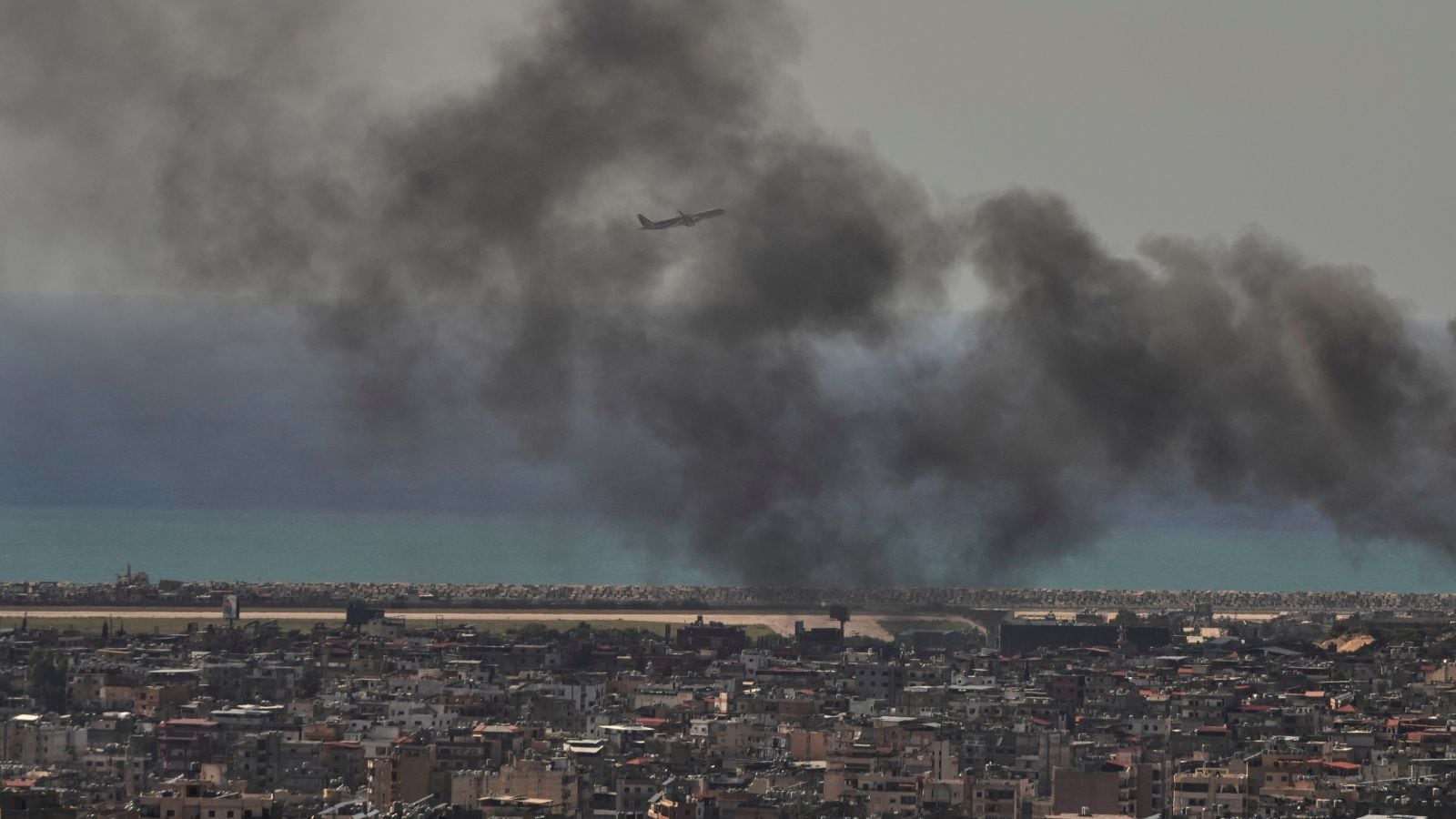
The sirens in Tel Aviv don’t just scream. They wail with a mechanical grief that settles into the marrow of your bones. It is a sound that transforms a modern, Mediterranean metropolis into a frantic hive of concrete and adrenaline in less than ninety seconds.
On this particular night, the air felt heavy, charged with the static of a thousand intercepted telegrams and the silent movement of metal across borders. When the first streak of light appeared over the horizon, it wasn't a shooting star. It was a promise kept by the Islamic Revolutionary Guard Corps (IRGC).
Imagine a young father, let’s call him Elias, standing in a stairwell in West Jerusalem. He is holding a sleeping three-year-old whose head rests heavy on his shoulder. Elias isn't thinking about regional hegemony or the geopolitical chess match between Tehran and Jerusalem. He is counting pulses. He is listening for the muffled thump-thump of the Iron Dome, a sound that resembles someone slamming a heavy car door three blocks away. Every slam is a reprieve. Every silence is a threat.
The IRGC calls these "waves." It is a nautical term for a phenomenon made of fire and solid fuel. This latest escalation represents more than just a military maneuver; it is a calculated test of the world’s most sophisticated shield.
The Anatomy of the Arc
To understand why this matters, we have to look past the headlines of "fresh attacks." We have to look at the physics of the fear. A ballistic missile launched from Iranian soil travels a distance that defies easy comprehension. It climbs into the thinning atmosphere, a lonely traveler carrying a payload designed to undo years of architectural labor and human life.
The IRGC’s strategy relies on saturation. If you throw enough stones at a glass house, eventually, the person catching them will slip. This isn't a secret. It’s a mathematical certainty they are betting on. They deploy a cocktail of hardware: slow-moving "suicide" drones that buzz like lawnmowers in the dark, cruise missiles that hug the terrain to avoid radar, and the heavy hitters—the ballistic missiles that rain down from the edge of space.
For the person on the ground, the distinction between a Fattah-1 and a Shahab-3 is irrelevant. What matters is the light. When the sky catches fire, the shadows on the pavement stretch and warp, making the familiar streets look like a distorted dreamscape.
The Invisible Shield and Its Human Cost
We often talk about the Iron Dome, David’s Sling, and the Arrow system as if they are mythical deities protecting the land. We treat them as infallible. But these systems are the result of thousands of hours of human ingenuity, and they operate on a razor’s edge.
Consider the "Arrow" interceptor. It is a bullet hitting a bullet in the dark.
The cost of this defense is staggering, not just in Shekels or Dollars, but in the psychological tax it levies on the population. When the IRGC launches a wave, they aren't just targeting military bases or infrastructure. They are targeting the concept of "home." They are trying to prove that nowhere is truly out of reach.
The Iranian commanders in Tehran watch the same grainy footage we do, but they see different things. They see the reaction times. They see how many interceptors are required to neutralize a single threat. They are gathering data for the next time, and the time after that. It is a grim rehearsal.
The Geography of Ghost Cities
In the north, near the border with Lebanon, the silence is even more haunting than the sirens. Tens of thousands of people have become internal refugees in their own country. The "waves" from the IRGC aren't always direct; they often flow through proxies, turning once-vibrant Galilee villages into ghost towns where the only sound is the wind through the abandoned citrus groves.
The stakes are invisible until they aren't. They are hidden in the empty classrooms and the shuttered storefronts. This isn't just a war of missiles; it’s a war of displacement. The goal is to shrink the map, to make the borders feel porous and the heartland feel fragile.
The Logic of the Long Game
Why now? Why another wave?
The IRGC operates on a timeline that stretches across decades, not news cycles. Each attack is a sentence in a much longer book. They are testing the resolve of international alliances. They want to see who stands firm when the sky turns red and who begins to blink.
The sophisticated nature of these attacks—the way they synchronize the arrival of different weapon types—suggests a level of planning that goes far beyond a simple retaliatory strike. It is an orchestral arrangement of destruction. They are trying to find the resonance frequency of the Israeli defense network, hoping to find the one note that will shatter the glass.
But there is a human element they often overlook.
Resistance isn't just found in a missile battery. It’s found in the stairwell with Elias. It’s found in the way a city cleans up the glass and reopens the cafes twenty-four hours after the sirens stop. There is a stubborn, almost defiant normalcy that takes root in the aftermath of a wave. It is a refusal to live in the past tense.
The Weight of the Morning
When the sun finally rises over the Judean Hills, it reveals a sky that is once again blue and indifferent. The debris has been gathered. The damage assessments have been filed. The headlines have been written.
But the people who spent the night in the shelters carry the weight of the dark with them into the light. They look at the horizon differently now. They know that somewhere, hundreds of miles away, the next wave is being fueled. They know that the "fresh attacks" reported by the media are just the latest pulses in a fever that refuses to break.
The true cost of this conflict isn't found in the craters or the charred remains of a drone. It is found in the eyes of a child who asks if the stars are going to fall again tonight. It is found in the quiet, desperate hope that one day, the only things crossing the border will be the birds and the clouds.
Until then, the sirens remain on standby, and the shield remains raised, waiting for the next time the IRGC decides to turn the sky into a battlefield.
The map remains the same, but the people on it are permanently altered, living in the brief, beautiful pauses between the waves.