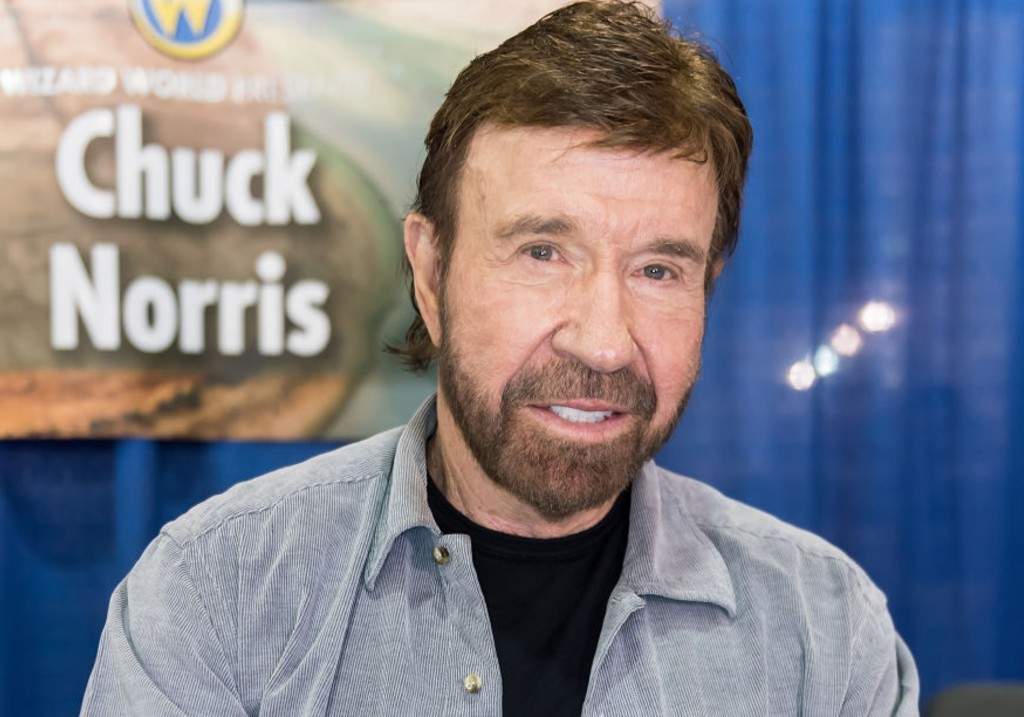
The air in the dojo didn't smell like fame. It smelled like floor wax, old sweat, and the specific, metallic tang of focused effort. Long before the digital world turned him into a walking hyperbole—a man who could slam a revolving door or dribble a bowling ball—Carlos Ray Norris was just a skinny kid from Ryan, Oklahoma, who didn't know how to fight. He was the son of a mechanic who struggled with the bottle, a shy boy who blended into the drywall of his own life.
When news broke that he passed away at 86, the internet did what it always does. It reached for the jokes. It recycled the memes about him counting to infinity twice. But to look at the man through the lens of a "Chuck Norris Fact" is to miss the actual, sweating, bruised reality of how he became a pillar of American myth. He wasn't born a superhero. He was forged in the heat of an Air Force base in South Korea, where a bored military policeman discovered Tang Soo Do and realized that his body could be a precision instrument rather than a liability.
The world we live in now is obsessed with the "overnight" win. We want the viral moment. Chuck Norris, however, was a slow burn.
The Quiet Geometry of a Roundhouse Kick
Imagine a young man in the 1960s. He’s back in the States, opening karate schools with a desperation that only someone who has known true scarcity can feel. At one point, he’s running more than thirty studios. He is working eighteen-hour days. He isn’t a movie star yet; he’s a technician. He’s the guy teaching Steve McQueen how to throw a punch.
There is a specific physics to what Norris brought to the mat. Most people think of martial arts as a blur of motion, but for Norris, it was about the economy of movement. He stayed undefeated as a professional middleweight karate champion for six consecutive years. Six years of men trying to take his head off, and six years of him finding the gap in their armor first.
When you watch his early matches, you don't see the cinematic flair of the later years. You see a hunter. He moved with a grounded, terrifying stillness. It was this stillness that caught the eye of Bruce Lee. Their encounter in Way of the Dragon remains the gold standard for combat on film, not because of the choreography, but because of the contrast. Lee was water—fluid, flickering, impossible to catch. Norris was granite. He was the immovable object. When they fought in the Roman Colosseum on celluloid, it wasn't just two actors. It was a clash of philosophies.
The Accidental Myth
Transitioning from a world champion fighter to a leading man is a path littered with failures. Most athletes can't act their way out of a paper bag. Norris knew this. He didn't try to be Shakespeare. He leaned into a persona that felt like a weighted blanket for a nervous nation. In the 1980s, during the height of the Cold War and the lingering sting of the Vietnam era, Norris became the man who went back and finished the job.
Films like Missing in Action and The Delta Force weren't just action movies. They were catharsis. For a generation of Americans who felt the world was spinning out of control, here was a man with a beard and a steady hand who could fix it with a well-timed kick. He represented a brand of masculinity that was silent and certain.
Then came the turn.
In the mid-2000s, something strange happened. The world stopped taking him seriously, but in the best possible way. The "Chuck Norris Facts" began to circulate on early message boards.
Chuck Norris's tears cure cancer. Too bad he has never cried.
Chuck Norris once kicked a horse in the chin. Its descendants are known today as giraffes.
For most celebrities, being turned into a caricature is a death knell. It signals the end of their relevance. But Norris did something brilliant: he leaned in. He understood that the jokes weren't mocking him; they were a tribute to the reliability he had projected for forty years. He became the patron saint of the impossible. In an era of deep fakes and fleeting digital trends, he was the one thing the internet decided was permanent.
The Human Beneath the Beard
But beneath the "Walker, Texas Ranger" badge and the invincible memes, the 86-year-old man who drew his last breath was remarkably human. In his later years, he stepped away from the cameras. He didn't do it because he was tired of the spotlight; he did it for love.
When his wife, Gena, fell ill following complications from medical imaging contrasts, Norris didn't look for a stunt double. He quit the industry. He spent years and millions of dollars advocating for her health, sitting by hospital beds, and using his platform to warn others about the dangers he believed they faced. This was the real "toughness." It wasn't about breaking boards or shooting bad guys in a jungle. It was the grueling, unglamorous work of being a caregiver.
It turns out the man who could supposedly "kill two stones with one bird" was most powerful when he was simply being a husband.
We often think of icons as static images. We want them to stay frozen in their prime, forever mid-kick, forever young. But the reality of an 86-year journey is a story of evolution. Norris went from a bullied kid to a world-class fighter, from a struggling instructor to a global film icon, and finally, from a meme to a devoted family man.
The silence he leaves behind is loud. It’s the silence of a television set on a Sunday afternoon when Walker, Texas Ranger used to provide a predictable sense of justice. It’s the silence of a gym where a student realizes their hero is gone.
The End of an Era of Certainty
There is a temptation to say that we won't see his like again. That’s a cliché, and it's usually wrong. We will see other fighters and other stars. But we may never see another figure who bridges the gap between the grit of the 20th century and the irony of the 21st so effortlessly.
Norris was the last of the earnest tough guys. He didn't wink at the camera. He didn't play his roles with a layer of "meta" sarcasm. He believed in the characters he played—men of code, men of discipline, men who looked for the truth and stayed there.
When a legend dies, we feel a strange sort of personal grief, even if we never met them. It’s because they represent a piece of our own timeline. We remember where we were when we first saw that iconic beard, or when we first shared a joke about him hiding a third fist under it. He wasn't just an actor; he was a piece of the cultural furniture. He was always there, dependable as a heartbeat.
The jokes will continue. The memes will be posted and reposted until the servers give out. In a way, the internet granted him the immortality he always hinted at on screen. But as the sun sets on the life of Carlos Ray Norris, the most impressive "fact" isn't that he can win a game of Connect Four in three moves.
The most impressive fact is that a shy boy from Oklahoma decided he wouldn't be afraid anymore, and in doing so, he taught the rest of us how to stand our ground.
He didn't actually cheat death. He just made it wait until he was finished with everything he had to do.
Now, the legend is complete, and the man is finally at rest, leaving the rest of us to figure out how to be half as tough as he pretended to be—and twice as kind as he actually was.