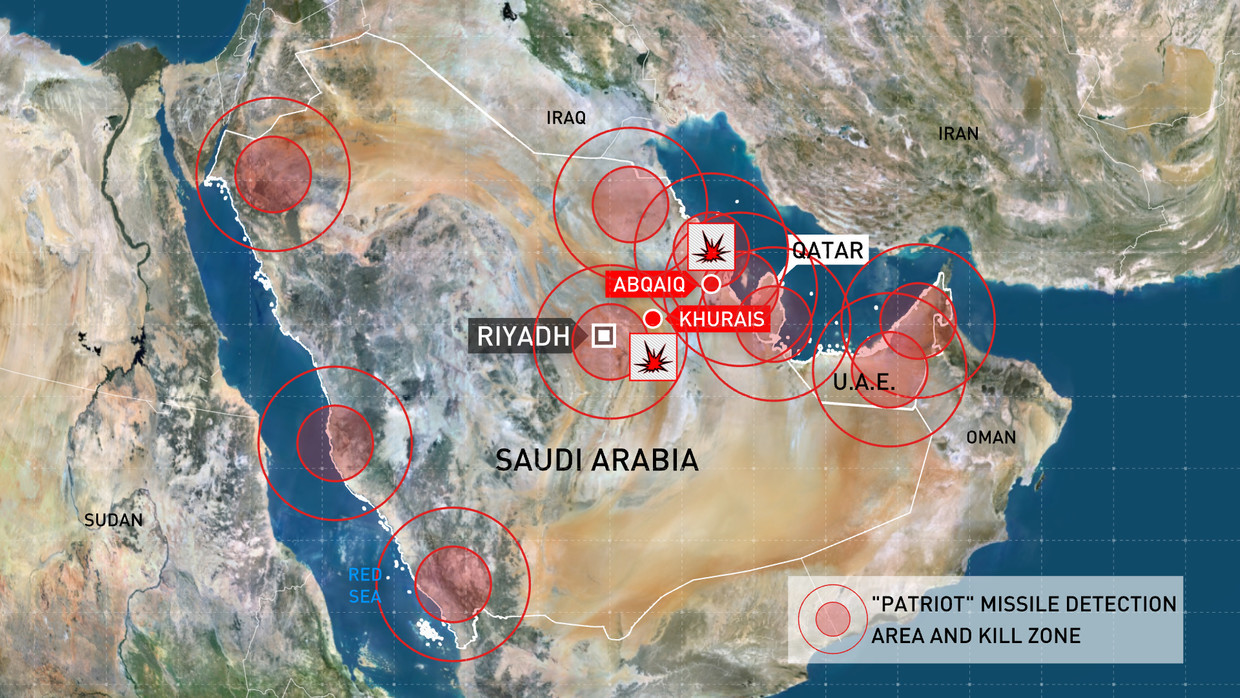
The trajectory of a ballistic missile is a mathematical certainty until it meets an interceptor. At that point, physics yields to chaos. On the night of March 18, 2026, that chaos found Ravi Gopal, a 26-year-old driver from the Mahabubabad district of Telangana, who was working a shift near an oil refinery in Riyadh. While Saudi air defenses successfully "neutralized" the incoming Iranian projectiles, the victory was academic for Gopal. He was crushed under the falling debris of a high-altitude interception, becoming the sixth Indian national to die since the regional conflict ignited on February 28.
Gopal’s death is not just a statistical anomaly in a distant war. It is a stark exposure of the vulnerability of the 2.6 million Indian expatriates who form the backbone of the Saudi economy. As Iran and Israel trade blows across the Middle Eastern sky, the migrant workers on the ground have transitioned from economic opportunists to unintended front-line targets.
The Myth of the Iron Umbrella
For decades, the security of Riyadh was predicated on the sophisticated "layered defense" provided by Patriot missile batteries and burgeoning domestic systems. The narrative was simple: the sky is closed. However, the recent escalation proves that "intercepted" does not mean "disappeared." When a missile traveling at several times the speed of sound is struck by a kinetic kill vehicle, the resulting wreckage does not vaporize. It rains down in jagged, multi-ton fragments.
Gopal was on the phone with his wife, Ritu, when the line went dead. The 20-minute conversation ended not with a goodbye, but with a sudden silence that has become a recurring nightmare for families across Telangana and Uttar Pradesh. For the Saudi military, the interception was a success because it prevented a direct hit on critical energy infrastructure. For the Indian diaspora, the event proved that proximity to industrial hubs is now a death sentence.
The refinery south of Riyadh, where the debris fell, represents the very "strategic interests" that both sides are targeting. Iran’s strategy has shifted from symbolic strikes to a campaign of economic attrition, aiming to choke energy supply chains and drive up global insurance premiums. In this calculus, the laborers living in labor camps or working in industrial zones are considered collateral noise.
The Economic Trap of the Expat Corridor
Why do they stay? The answer is rooted in the brutal economics of rural India. Gopal was the sole breadwinner for his family, including a four-year-old son. The remittances sent home from a driver's salary in Riyadh far outweigh any earning potential in Mahabubabad. This financial tether creates a paralysis of choice: stay and risk the missiles, or return home to certain poverty.
The Indian Embassy in Riyadh has issued numerous advisories urging citizens to "stay vigilant" and "strictly adhere to safety guidelines." But safety guidelines are difficult to follow when your employment contract requires you to be stationary in a high-risk industrial zone. There are no bunkers for migrant drivers. There are no early-warning apps translated into Telugu or Hindi that provide enough lead time to find meaningful cover.
The Indian government faces a diplomatic tightrope. New Delhi cannot afford to alienate Riyadh, a key energy partner, nor can it ignore the mounting body count of its citizens. External Affairs Minister S. Jaishankar has maintained constant contact with his Saudi counterpart, Faisal bin Farhan, but the focus remains on "stabilization" rather than evacuation. An evacuation of 2.6 million people is logistically impossible and economically ruinous for both nations.
A Legacy of Neglect in Repatriation
While the political machinery grinds slowly, the immediate burden falls on the bereaved. Gopal’s family is currently navigating the labyrinthine process of bringing his mortal remains back to India. This process is notoriously grueling, involving local police verifications, embassy clearances, and the cooperation of Saudi employers who may be more concerned with factory downtime than funeral arrangements.
In similar cases earlier this month—such as the projectile strike in Al-Kharj that initially misidentified casualties—families were left in a state of agonizing limbo for days. The Indian mission has promised "all possible assistance," but for a family in a Telangana village, these words offer little comfort against the reality of a body held in a morgue 3,000 miles away.
The regional conflict shows no signs of cooling. With oil prices surging past $100 per barrel and Gulf airspace frequently shuttered, the logistics of repatriation will only become more difficult. The "West Asia War" is no longer a localized border dispute; it is a sprawling, multi-domain theater where the technology of the future is killing the laborers of the present.
The death of Ravi Gopal should serve as the final warning. The Indian government’s policy of "vigilance" is an insufficient shield against ballistic debris. Without a dedicated, high-speed protocol for the protection and, if necessary, the staged extraction of workers from high-risk zones, the migrant corridor will continue to transform into a graveyard. The mathematics of the sky are no longer in favor of those on the ground.
Ask me if you would like me to draft a formal inquiry to the Ministry of External Affairs regarding the status of the "Madad" portal for these specific war-zone casualties.