The global oil market is a volatile mess. You've probably felt it at the pump. When supply chains tighten and geopolitical tensions flare, the knee-jerk reaction from most governments is to scramble for more drilling or beg OPEC to open the taps. But the International Energy Agency (IEA) is pitching a different, more immediate strategy. They aren’t looking at the ground for more oil. They’re looking at your office and your speedometer.
The IEA recently released a 10-point plan aimed at cutting oil demand. This isn't just about "being green" for the sake of it. It’s an emergency response to a potential supply crunch that could cripple economies. If we don’t want to be held hostage by soaring prices, the agency argues we need to change how we move. Now. Meanwhile, you can read similar stories here: The Cold Truth About Russias Crumbling Power Grid.
Why cutting demand is the only fast move left
Drilling for more oil takes years. It’s a slow, expensive process involving permits, rigs, and massive infrastructure. We don't have years when a crisis hits. We have weeks. That’s why the IEA focuses on behavior.
By following their 10-point plan, advanced economies could cut oil demand by 2.7 million barrels a day within four months. To put that in perspective, that’s roughly equivalent to all the cars in China vanishing from the road. It’s a massive number. It’s also entirely possible without building a single new factory. To explore the bigger picture, we recommend the recent analysis by USA Today.
The logic is simple. If we use less, the price drops. Demand-side management is the most powerful tool we ignore because it requires individual effort. But when the alternative is $150 a barrel, a little effort starts to look pretty good.
Work from home is the ultimate oil shield
The single most effective tip in the IEA playbook is working from home. If you can do your job from a laptop, the agency thinks you should be doing it at least three days a week.
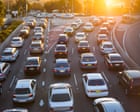
Commuting is the biggest sink of transport fuel in the developed world. Think about the millions of cars idling in gridlock every morning. It’s a staggering waste of energy. The IEA estimates that working from home three days a week could save 500,000 barrels of oil a day globally.
Most companies already have the tech. We proved it during the 2020 lockdowns. Back then, it was a health necessity. Now, it’s an economic defense mechanism. Honestly, it's the easiest win on the list. You save money on gas. The grid saves oil. You get an extra hour of sleep. Everybody wins except the gas station owners.
Slowing down to save the economy
This one is harder for people to swallow. The IEA wants speed limits on highways reduced by at least 10 km/h (about 6 mph).
Physics is a stubborn thing. Drag increases exponentially as you speed up. A car driving at 110 km/h uses significantly less fuel than one pushing 120 or 130 km/h. It’s not just a tiny difference. It’s a measurable, massive impact when scaled across an entire nation’s highway system.
Countries like Spain have tried this before during past energy crunches. It works. It saves lives, too, which is a nice side effect. But it’s a tough sell in a culture that prizes "making time." You have to ask yourself if getting to your destination five minutes earlier is worth the extra five bucks at the pump. For the IEA, the answer is a hard no.
Car free Sundays and the end of the commute
The IEA doesn't stop at speed limits. They’re calling for car-free Sundays in large cities. It sounds radical, but it’s a throwback to the 1970s oil crisis. During that era, several European countries banned Sunday driving to preserve stocks.
It’s about breaking the habit of car dependency. If people can’t drive on Sunday, they walk. They bike. They take the bus. It forces a shift in perspective. More importantly, it slashes fuel consumption during a time when people usually do a lot of discretionary driving.
Public transit must be cheaper
You can't tell people to stop driving if the bus costs more than a gallon of gas. The IEA suggests making public transport cheaper—or even free—during an energy emergency.
They also push for "active transport." That’s fancy talk for walking and biking. By investing in "pop-up" bike lanes and pedestrian zones, cities can move people without burning a drop of oil. It’s about creating options so that the car isn't the only way to get a loaf of bread.
The problem with the IEA plan
Let’s be real. This plan isn’t perfect. It assumes everyone has a white-collar job that can be done from a couch. It ignores the plumber, the nurse, and the grocery clerk who have to show up in person.
There’s also the "rebound effect." If oil prices drop because we’re all being frugal, some people might see that as an excuse to drive more. It’s a psychological trap. To make this work, the shift has to be more than just a temporary emergency measure. It needs to be a fundamental change in how we think about mobility.
The IEA knows this. They aren't saying these measures are fun. They’re saying they are necessary to prevent a total economic meltdown. It’s a choice between a bit of inconvenience now or a massive recession later.
Business travel is on the chopping block
Before the world went digital, you flew across the country for a one-hour meeting. The IEA says those days need to end.
Aviation is a huge part of oil demand. While planes are getting more efficient, the sheer volume of flights is still a problem. By cutting out "non-essential" business travel and using video calls instead, we can save a significant amount of jet fuel. It’s another area where the infrastructure is already in place. We just need the discipline to use it.
Your immediate checklist for the next price hike
You don't have to wait for your government to mandate these changes. You can start shielding your own wallet right now.
- Negotiate your remote days. If you’re in an office five days a week, push for three. Use the energy crisis as your leverage. It's a business continuity play.
- Ease off the pedal. Try driving 5-10 mph slower on your next highway trip. Watch your fuel economy gauge. The numbers don't lie.
- Audit your errands. Group your trips. Don't go out three times for three different things. Map it out and do it in one loop.
- Check your tires. Under-inflated tires are like anchors for your car. Keeping them at the right PSI is the easiest way to stop wasting fuel.
- Use the train. If you live in an area with decent transit, use it for one trip a week where you’d normally drive.
The IEA isn't just shouting into the void. They're providing a blueprint for resilience. We’ve spent decades focusing on how to get more oil out of the ground. It’s time we spent a little more time thinking about how to keep it there. If you want to stop complaining about gas prices, start looking at how much you’re actually using. The power to move the market is quite literally in your right foot.