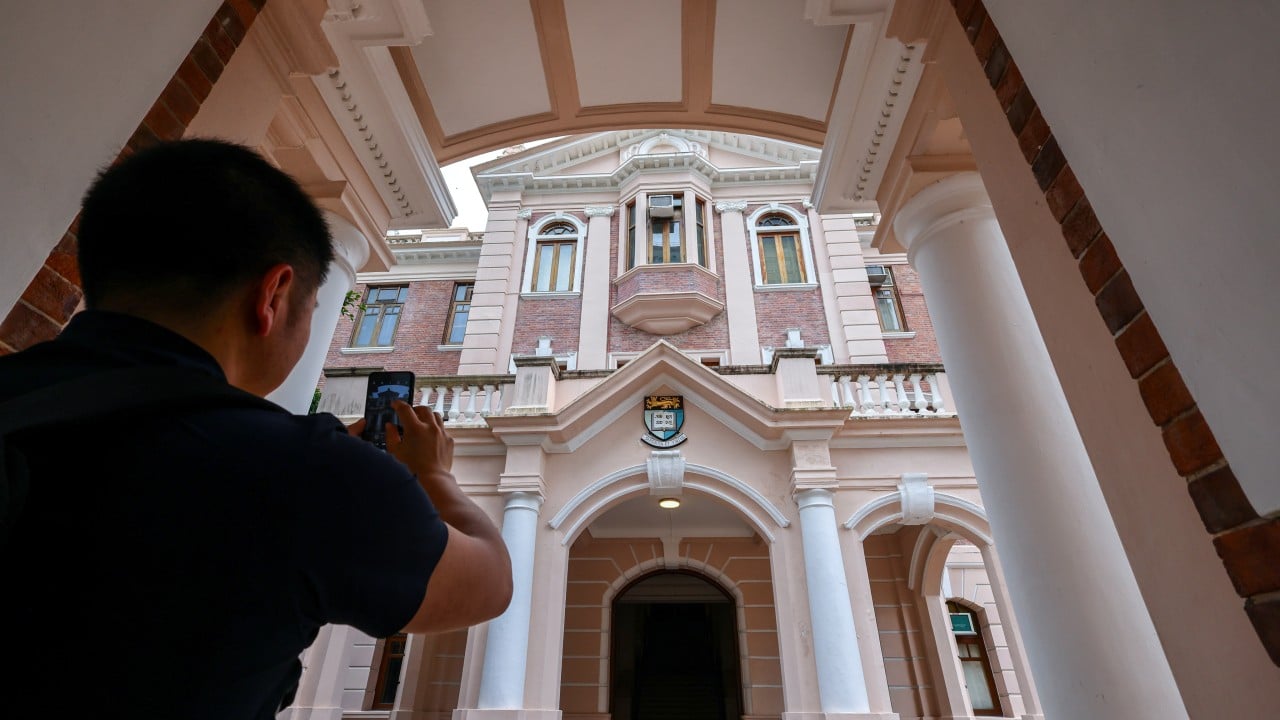
The Hong Kong Investment Corporation (HKIC) is no longer playing the role of a passive observer in the city's struggling startup ecosystem. By partnering with Gobi Partners and the University of Hong Kong (HKU) to launch a dedicated fund for university research startups, the government-backed "sovereign wealth fund" is signaling a desperate shift toward commercializing the ivory tower. This is not about supporting small businesses; it is about building a defensive wall of proprietary intellectual property. For decades, Hong Kong universities have topped world rankings for research while simultaneously failing to produce a single hardware or deep-tech giant on the scale of DJI or SenseTime without those companies eventually migrating their core operations to Shenzhen or Shanghai.
This new alliance aims to stop the "brain drain" of patents. By injecting capital at the earliest possible stage—the point where a PhD student decides whether to take a safe corporate job or gamble on a prototype—HKIC and Gobi Partners are attempting to buy loyalty to the local ecosystem. The mandate is clear: keep the tech, the talent, and the taxes in Hong Kong.
The Death of the Middleman Model
Hong Kong’s historical wealth was built on being a bridge. It was the place where the West met the East, a high-functioning trade hub that didn't need to make anything because it moved everything. That era has ended. As geopolitical tensions tighten and supply chains decouple, being a middleman is a dangerous business. The city now realizes it must become a producer.
The partnership with HKU is strategic. Among the city's institutions, HKU holds a massive repository of untapped patents in biotechnology, materials science, and quantum computing. However, the path from a laboratory at Pok Fu Lam to a manufacturing plant in the Northern Metropolis is riddled with "death valleys." Most academic founders lack the capital to survive the three to five years of testing required before a product is even market-ready.
Private venture capital has historically avoided this. Traditional VCs in the region prefer "software-as-a-service" or consumer apps because the returns are faster and the risks are lower. You don't need a cleanroom to build an app. You do need one to build a semiconductor. By stepping in, HKIC is acting as the "patient capital" that the private sector refuses to provide. They are betting that the next decade of economic dominance will be won by whoever owns the most advanced physical technologies, not who has the best food delivery interface.
Gobi Partners and the Regional Playbook
Gobi Partners brings a specific kind of aggression to this triumvirate. Having managed the Alibaba Hong Kong Entrepreneurs Fund, they understand the friction of scaling a business in a city with astronomical rents and a tiny domestic market. Their role is to act as the bridge to the Greater Bay Area (GBA).
The logic is simple. Hong Kong provides the research and the legal framework. The GBA provides the factories and the scale. If this fund works, it creates a pipeline where an HKU researcher can develop a new battery chemistry, secure the patent under Hong Kong law, and then use Gobi’s network to plug into the manufacturing clusters in Dongguan.
The risk, of course, is that this becomes another exercise in "grant-preneurship." In many state-backed ecosystems, founders become experts at winning government funds rather than winning customers. HKIC must ensure that its involvement doesn't soften the competitive edge of these startups. The goal is a profitable exit, not a permanent subsidy.
Why Universities Fail at Business
The biggest hurdle isn't money. It is culture. Academic excellence and commercial viability are often at odds. A professor is incentivized to publish their findings in a high-impact journal. A CEO is incentivized to keep those findings a trade secret until they can be patented and sold.
When a university takes a stake in a student’s startup, it often demands onerous terms. High equity stakes or restrictive licensing agreements can kill a startup before it even gets its first seed round. This new fund structure suggests a realization that the old rules need to be broken. For HKU to become a true incubator, it has to behave more like Stanford and less like a government department.
We are seeing a shift in how intellectual property (IP) is handled. The fund is designed to streamline the "tech transfer" process. Instead of months of legal wrangling between the university's legal office and the founders, the fund provides a pre-cleared pathway. Speed is the only currency that matters in deep tech. If a competitor in Boston or Tel Aviv hits the market six months earlier, the Hong Kong patent becomes a historical footnote.
The Capital Gap in Deep Tech
Deep tech startups—those based on substantial scientific or engineering challenges—require a different math.
- High Initial Burn: You need specialized equipment and highly paid researchers before you have a product.
- Regulatory Hurdles: Biotech and medtech require years of clinical trials.
- Hardware Risk: Unlike software, if you find a bug in a physical chip, you can't just push a "patch" overnight. You have to scrap the batch.
The HKIC-Gobi-HKU fund is essentially a buffer against these three realities. By providing specialized funding that doesn't demand a 10x return in twenty-four months, they are allowing researchers to actually do the work. This is the "why" behind the headlines. It is an admission that the market has failed to support the very sector the government claims is the future of the economy.
The Northern Metropolis Connection
You cannot talk about this fund without talking about land. The Hong Kong government’s push for the Northern Metropolis—a massive development project near the border with Shenzhen—is the physical manifestation of this investment strategy.
The startups funded by this new initiative are the intended tenants for those future tech parks. If the fund fails to produce viable companies, the Northern Metropolis becomes a collection of empty office towers. The pressure on HKIC to "pick winners" is immense. They aren't just investing for profit; they are investing to justify a multi-billion dollar urban planning project.
This creates a conflict of interest that analysts must watch closely. Will the fund invest in the best technology, or will it invest in the companies most likely to sign a long-term lease in a government-owned building? True investigative scrutiny will be required two to three years down the line to see where this money actually landed.
Beyond the Press Release
The success of this initiative will be measured by one metric: the number of private co-investors. If HKIC and Gobi are the only ones at the table, the project is a failure. Government money should be the "cornerstone" that gives private VCs the confidence to jump in.
We need to see Sequoia, IDG, or local family offices putting their own skin in the game alongside this fund. If the private sector stays away, it means the "university research" being backed is still too academic and not nearly commercial enough.
The "hard-hitting" reality is that Hong Kong is playing catch-up. Singapore has been doing this for a decade through Temasek and A*STAR. Shenzhen has been doing it with a more ruthless, market-driven approach. Hong Kong’s advantage is its legal system and its concentration of top-tier universities in a tiny geographic area. This fund is the first real attempt to use those advantages as a unified weapon.
The Talent War
Finally, there is the human element. Funding a startup is easy. Keeping a world-class scientist in Hong Kong is hard. With the high cost of living and the lure of overseas labs, the city has to offer more than just a paycheck.
This fund needs to be part of a broader package that includes simplified visas for research assistants, subsidized housing for founders, and a clear path to the mainland Chinese market. The "partnership" aspect is key here. HKU provides the brains, Gobi provides the market savvy, and HKIC provides the political and financial weight to clear obstacles.
If this trio can actually work together without the bureaucracy of the university or the caution of the government getting in the way, they might actually build something. But in the world of venture capital, the odds are always against the house. Most of these university startups will fail. The question is whether the one or two that survive will be big enough to move the needle for Hong Kong’s GDP.
Look at the specific sectors mentioned in the underlying agreements. They focus on artificial intelligence, life sciences, and new energy. These aren't random choices. These are the sectors where China is currently in a direct standoff with the United States. By funding these specific areas, Hong Kong is positioning itself as the "neutral" lab where global talent can still work on sensitive tech under a common law framework, even as the rest of the world splits in two.
It is a high-stakes gamble with public money. If it works, Hong Kong creates a new economic pillar. If it fails, it’s just another expensive lesson in why you can’t force innovation from the top down.
Monitor the first batch of startups selected by this fund. If they are led by career academics who have never left the lab, be skeptical. If they are led by "bridge" figures—people with a foot in both the laboratory and the boardroom—then Hong Kong might finally have a fighting chance.
Check the patent filing rates at HKU over the next eighteen months. If we see a spike in "assigned to" filings involving Gobi-linked entities, we will know the pipeline is moving.