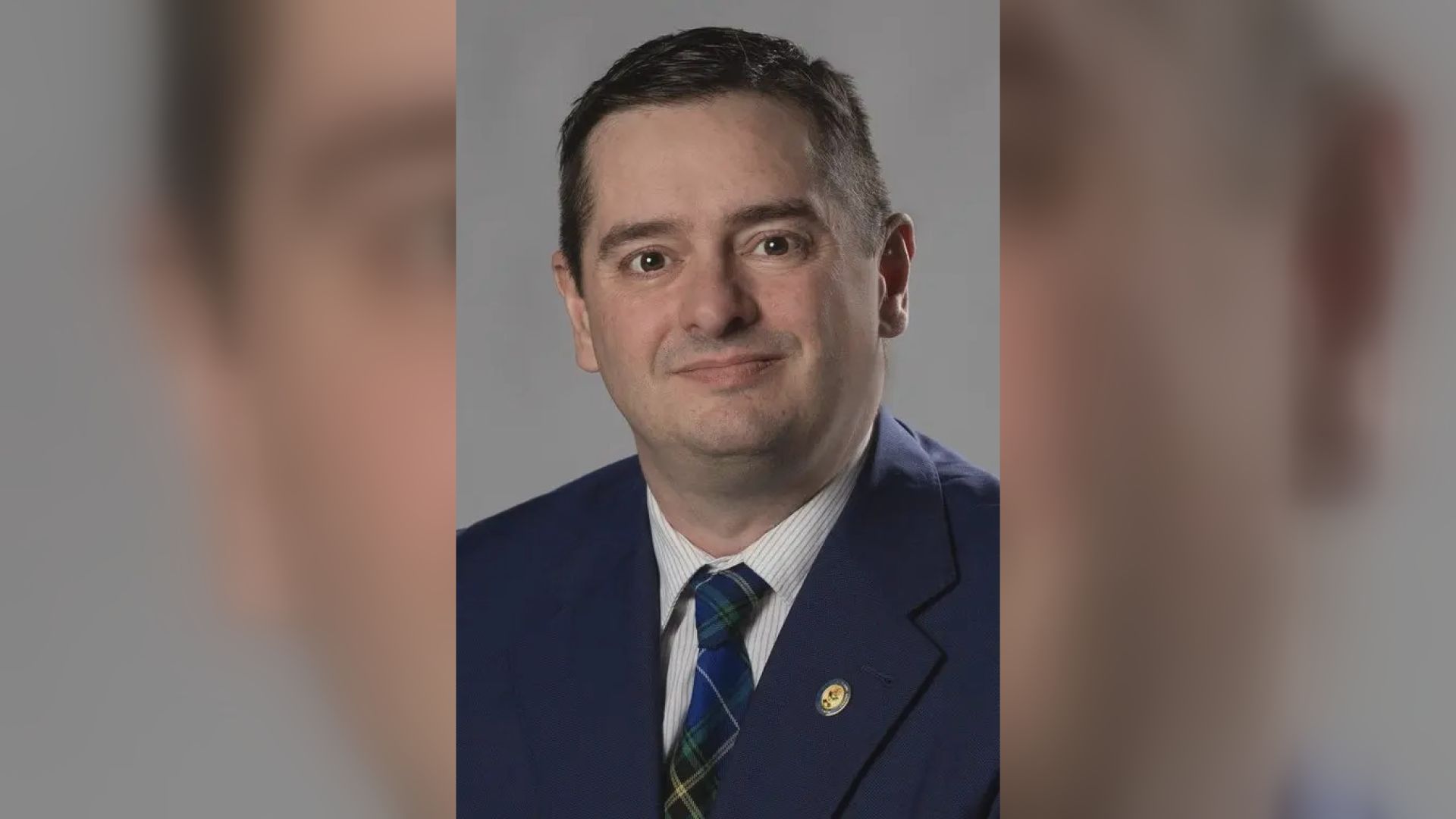
The light from a smartphone screen at three in the morning is a cold, clinical blue. It doesn’t just illuminate a room; it cuts through the privacy of a home like a searchlight. For Fred Tilley, the Liberal MLA for Northside-Westmount, that light wasn't just a notification. It was a breach.
We like to think of our digital lives as vaulted. We believe that if we use strong passwords or two-factor authentication, we are standing behind a thick oak door. The reality is that we are living in glass houses, and there are people in the dark outside with cameras and stones. When Tilley’s phone buzzed with an extortion attempt, the physical safety of his Nova Scotia home remained intact, but the walls of his private life effectively dissolved.
The message was a classic play from a modern, digital underworld. The hackers didn't want his political secrets or his legislative notes. They wanted money. In exchange, they promised not to release private, intimate images of him and his wife. It is a specific kind of terror, one that targets the most vulnerable intersection of a human being’s existence: the space where the public servant meets the private spouse.
The Architecture of a Shakedown
Blackmail used to be a game of physical envelopes and whispered phone calls. Today, it is automated. It is industrial. Imagine a digital trawler dragging a net across the floor of the internet. It doesn't care who it catches. It only cares about the leverage it can find.
In this instance, the "leverage" was the sanctity of a marriage. The hackers claimed to have compromised a cloud storage account, a common repository where we store our most cherished memories—and sometimes, our most private ones. When Tilley refused to pay, the hackers did exactly what they threatened. They didn't just leak the photos to a dark corner of the web; they sent them to his colleagues. They sent them to the people he works with every day under the red carpet and golden mace of the House of Assembly.
The goal was social assassination. By bypassing the victim and going straight to his professional circle, the attackers attempted to turn his own community into a weapon against him.
The Silence of the Victim
There is a specific weight to this kind of crime. If someone steals your car, you call the police and tell your neighbors to watch out. If someone steals your dignity, the instinct is to hide. We feel a misplaced sense of shame, as if the theft of our privacy was a failure of our character rather than a calculated act by a criminal.
Tilley chose a different path. Instead of retreating into the shadows or quietly paying the ransom—which, as any cybersecurity expert will tell you, rarely results in the deletion of the data—he stepped into the light. He went to the Sergeant-at-Arms. He went to the police. He told his story.
By doing so, he broke the circuit. Extortion only works if the victim is more afraid of the truth than they are of the criminal. When you take the "secret" and make it a matter of public record, the blackmailer loses their only currency. But the cost of that bravery is high. It means knowing that your coworkers, your constituents, and your critics have seen things that were never meant for their eyes.
A Pandemic of Pixels
This isn't just a story about a Canadian politician. It is a cautionary tale for anyone who has ever clicked "upload." We are currently living through a surge in "sextortion" and data theft cases that the legal system is struggling to pace.
Consider the sheer volume of data we generate. Every photo we take is tagged with metadata—GPS coordinates, timestamps, device IDs. When a hacker gains access to a single account, they aren't just getting pictures; they are getting a map of your life. They know where you were last Tuesday at 8:00 PM. They know the layout of your bedroom. They know the names of your family members.
The technology used to harvest this data has moved far beyond simple "password123" guessing. We see sophisticated phishing schemes that look like legitimate security alerts from Apple or Google. We see "credential stuffing," where hackers use passwords leaked from unrelated site breaches to see if they work on your email or cloud storage.
The Weight of the Public Eye
For a public figure, the stakes are amplified. In the political arena, reputation is everything. It is the invisible scaffolding that holds up a career. The hackers knew that by targeting an MLA, they weren't just attacking a man; they were attacking an institution. They were betting that the fear of a scandal would be enough to open his wallet.
But they miscalculated the modern temperature of the public. There is a growing realization that "privacy" is no longer a luxury we can maintain perfectly. We are starting to recognize that the victim of a leak is just that—a victim.
When the images were sent to other MLAs, the response wasn't a chorus of judgment. It was a wall of support. The legislative community recognized that if it could happen to Fred Tilley, it could happen to any of them. It could happen to the Premier. It could happen to the person sitting in the gallery. This collective vulnerability creates a new kind of solidarity.
The Myth of the Delete Button
The most terrifying aspect of this digital age is the permanence of the act. In the old world, a photograph could be burned. A negative could be destroyed. In the digital world, there is no such thing as "gone."
Once an image is uploaded to a server or sent through a network, it exists in fragments across multiple backups and caches. Even if a hacker promises to delete a file after a ransom is paid, there is no way to verify it. The data becomes a ghost that can haunt a person for decades, resurfacing whenever a new algorithm crawls the old corners of the web.
Tilley’s experience highlights a hard truth: our laws are currently a blunt instrument in a world of sharp digital blades. While the police can track IP addresses and coordinate with international agencies, the speed of the internet far outstrips the speed of a court order. By the time a suspect is identified, the damage—socially and emotionally—is often irreparable.
Reclaiming the Narrative
Fred Tilley’s decision to speak out was an act of digital reclamation. He took a situation designed to make him feel small and used it to highlight a systemic danger. He shifted the focus from the content of the images to the character of the theft.
This is the only way forward in a world where our private lives are increasingly stored on someone else's servers. We have to stop treating digital breaches as personal embarrassments and start treating them as the predatory crimes they are. We have to build a culture where the person who shares a leaked photo is viewed with the same disdain as the person who stole it.
The hackers wanted to turn Fred Tilley into a punchline. Instead, they turned him into a mirror. When we look at his story, we don't see a politician in trouble. We see the fragility of our own digital boundaries. We see the thin line between a private moment and a public crisis.
The blue light of the smartphone still shines in the middle of the night. But now, when it buzzes, we know that the person on the other side of the screen isn't just a ghost in the machine. They are a thief in the house. And the only way to keep the house standing is to stop pretending the walls are made of stone when we know they are made of glass.
The images are out there, somewhere in the ether, drifting through the dark matter of the internet. But the power they held—the power to silence, to shame, and to break—has been stripped away, replaced by the steady, unblinking gaze of a man who refused to be a secret.