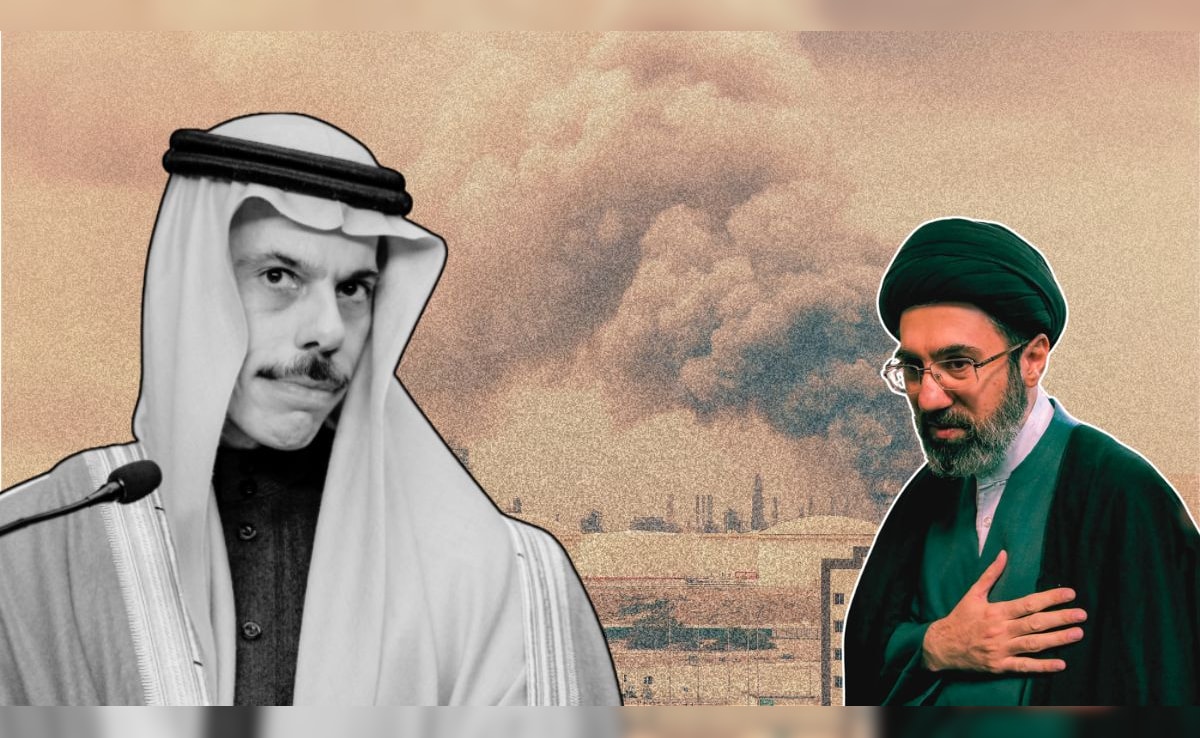
The shift from strategic patience to active deterrence in Saudi Arabia’s foreign policy indicates that the cost of inaction has finally surpassed the projected risk of regional escalation. For decades, Riyadh operated under a doctrine of "containment through proxies and diplomacy," but the increasing frequency of direct threats to critical energy infrastructure and maritime corridors has fundamentally altered the Kingdom's security calculus. This is not a rhetorical pivot; it is a recalibration of the Saudi state’s survival function against Iranian regional expansionism.
The Triad of Escalation Drivers
The transition toward military readiness is driven by three distinct systemic pressures that interact to reduce the viability of the status quo.
1. The Erosion of the Security Umbrella
The traditional reliance on a United States-led security architecture in the Persian Gulf is facing a credibility deficit. As Washington shifts its focus toward the Indo-Pacific, regional powers are forced to internalize their own defense costs. This "security internalization" means Riyadh must demonstrate a credible independent strike capability to prevent a power vacuum that Tehran is currently incentivized to fill.
2. Infrastructure Vulnerability as a Macroeconomic Risk
Saudi Arabia’s "Vision 2030" is contingent upon massive foreign direct investment and the stability of global energy markets. A single successful strike on a desalination plant or a primary processing facility like Abqaiq does not just disrupt oil flow; it shatters the investor confidence required to diversify the Saudi economy. The Kingdom now views military intervention as a necessary "insurance premium" to protect its domestic transformation.
3. The Failure of Diplomatic De-escalation
Recent attempts at rapprochement, including the Chinese-brokered deal to restore ties with Iran, have failed to produce a measurable reduction in Houthi or militia-led provocations. When diplomatic signaling fails to alter the adversary's behavior, the only remaining tool for behavioral modification is the credible threat of kinetic force.
The Mechanics of Kinetic Deterrence
Effective deterrence in the Gulf requires more than just hardware; it requires a clear communication of "red lines" backed by the demonstrated capability to strike high-value targets. The Saudi military has undergone a massive modernization effort, focusing on integrated air defense systems (IADS) and precision-guided munitions. However, the effectiveness of these tools is limited by the "Asymmetry Gap."
The Asymmetry Gap
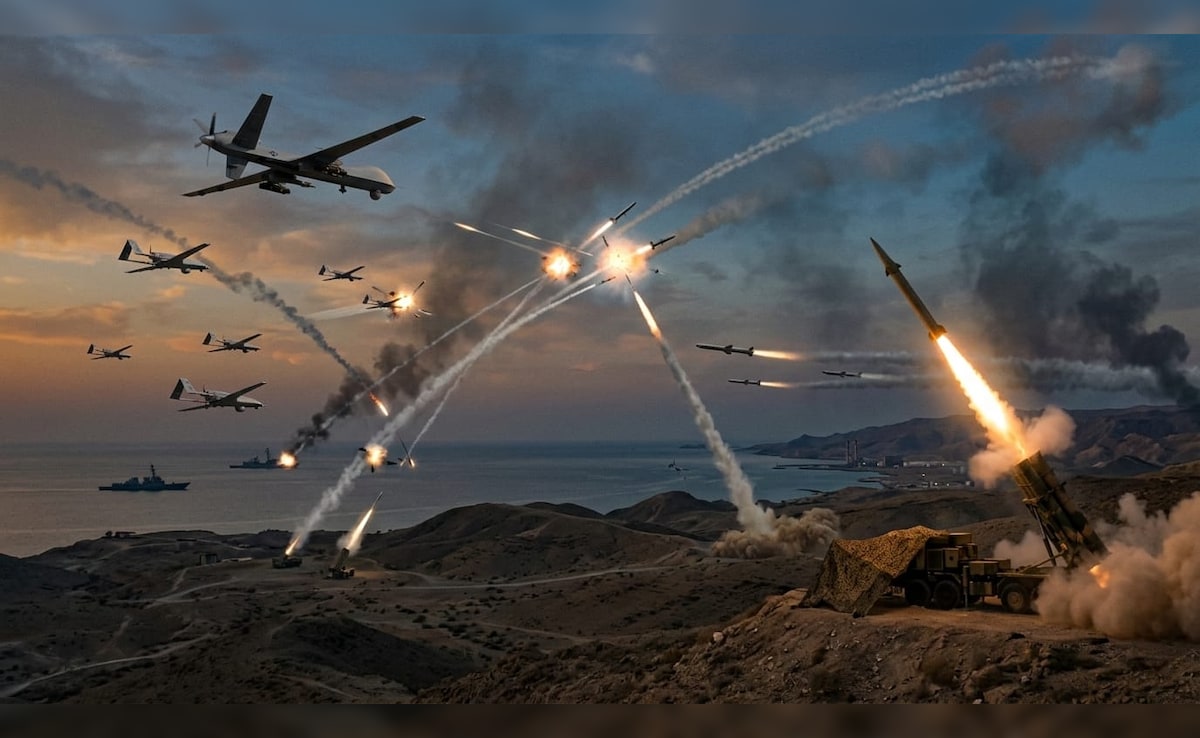
Iran and its affiliates utilize low-cost, high-impact assets—such as loitering munitions and fast-attack craft—to harass state-level actors. For Saudi Arabia, the cost of intercepting a $20,000 drone with a $2 million Patriot missile is economically unsustainable. Closing this gap requires a transition to directed-energy weapons and electronic warfare, shifting the cost-exchange ratio back in favor of the defender.
The Threshold of Intervention
Saudi Arabia’s "Red Line" logic is likely centered on three triggers:
- Direct Attribution: A verified strike originating from Iranian soil rather than a proxy.
- Sovereign Contiguity: Attacks targeting the Saudi mainland that bypass the "buffer zones" of Yemen or Iraq.
- Systemic Disruption: Interference with the Strait of Hormuz or the Bab el-Mandeb that halts 15% or more of global maritime trade.
Strategic Constraints and Force Multipliers
While the threat to join a regional conflict is a potent signal, Riyadh faces significant structural constraints that temper its appetite for a full-scale war.
The Logistics of Sustained Conflict
Modern high-intensity warfare consumes resources at an exponential rate. The Saudi military, while well-equipped, remains heavily dependent on foreign technical support for maintenance and intelligence, surveillance, and reconnaissance (ISR). A unilateral entry into a Gulf war would require an immediate and massive surge in domestic logistical autonomy, something the Kingdom is still building through its local defense industry (SAMI).
The GCC Coordination Variable
Saudi Arabia does not act in a vacuum. The alignment of the Gulf Cooperation Council (GCC) is fragmented. While Bahrain often mirrors Saudi positions, the UAE maintains a more nuanced approach focused on maritime security, and Qatar and Oman often act as mediators. For a Saudi threat to be truly transformative, it must be backed by a unified GCC command structure, or at least a functional "minilateral" alliance with key partners like Egypt or Jordan.
The Economic Consequences of a Pre-emptive Strike
If Riyadh moves from defensive posturing to pre-emptive action, the global economic fallout would be immediate. This is the "Dual-Edged Sword" of Saudi power.
- Crude Volatility: Brent crude would likely experience a "war premium" spike, potentially exceeding $120 per barrel within 48 hours. While this increases short-term revenue for the Kingdom, it accelerates the global transition to renewables and destroys long-term demand.
- Insurance and Freight: Maritime insurance rates for the Persian Gulf would become prohibitive, effectively placing a blockade on regional ports.
- Capital Flight: The "risk-off" environment would see a contraction in the very venture capital Riyadh needs to fund its "Giga-projects" like NEOM.
Calculating the Probability of Engagement
The current Saudi posture is a sophisticated "brinkmanship" play. By signaling a willingness to engage in a regional conflict, Riyadh is attempting to force the international community—specifically the U.S. and the E.U.—to take more aggressive measures against Iranian proxies. This is a demand for a multilateral security guarantee, using the threat of regional chaos as the primary lever.
The probability of direct Saudi involvement increases linearly with the decline of U.S. naval presence in the region. If the Fifth Fleet's footprint continues to shrink without a replacement maritime task force, Saudi Arabia will be forced to act as the regional "security provider of last resort."
The Strategic Pivot Point
The Kingdom is currently at a junction where "Patience" is no longer a virtue but a liability. To maintain its regional standing and protect its domestic economic revolution, Saudi Arabia must execute a three-stage escalation ladder:
- Information Warfare and Attribution: Publicly declassifying intelligence that links proxy attacks directly to the IRGC to build international consensus.
- Targeted Proportional Response: Utilizing long-range precision strikes against the specific launch sites or command centers responsible for incursions, regardless of their location.
- Full Theater Integration: Transitioning from a national defense posture to a regional "Lead Nation" status, commanding a coalition fleet in the Gulf.
The move into a Gulf war is not a desired outcome for Riyadh; it is a contingency plan for a world where the rules-based order in the Middle East has completely disintegrated. The Saudi threat is a signal that the Kingdom will no longer allow its territory to be a passive battleground for external interests. If the cost of peace is the slow strangulation of its economic future, the Kingdom is signaling it will choose the risk of war instead.
Establish a formal "Defense of the Commons" treaty with secondary regional powers to spread the operational burden of maritime security, thereby reducing the dependency on the U.S. while simultaneously creating a unified front that raises the cost of Iranian escalation.