The headlines are screaming about a "betrayal" in Brussels. Pundits are clutching their pearls because a single member state or a bureaucratic deadlock has stalled a multi-billion euro package. They call it a gift to the Kremlin. They call it the end of European solidarity.
They are looking at the wrong map.
The "lazy consensus" dictates that more external capital, delivered faster, is the only metric of success. This is a fundamental misunderstanding of how resilient states are built and how modern attrition warfare actually functions. If you think a delay in EU funding is a death knell, you haven't been paying attention to the mechanics of sovereign survival. This isn't a crisis; it’s a necessary stress test that the EU—and Ukraine—desperately needed.
The Myth of the "Shattered Front"
The immediate assumption is that without the €50 billion "Ukraine Facility" or its successor tranches, the front line collapses by Tuesday. This is a spreadsheet fantasy. War is fought with steel, explosives, and logistics, not just digital transfers from the European Central Bank.
While the financial aid is vital for paying civil servants and keeping the lights on, the delay forces a brutal, necessary prioritization. It strips away the "luxury" of inefficiency. For years, I’ve seen governments and corporations alike bloat their operations because the tap was left wide open. When the tap tightens, you find out who is essential and who is just a line item in a patronage network.
The blockade forces Ukraine to accelerate its transition to a self-sustaining defense economy. Dependency is a strategic vulnerability. By slowing the flow of "easy" money, the EU accidentally incentivized Ukraine to finalize joint ventures with Rheinmetall and other defense giants to produce hardware on-site. Real sovereignty isn't granted by a vote in Brussels; it’s forged when you stop asking for permission to defend yourself.
The Orban Distraction: A Useful Villain
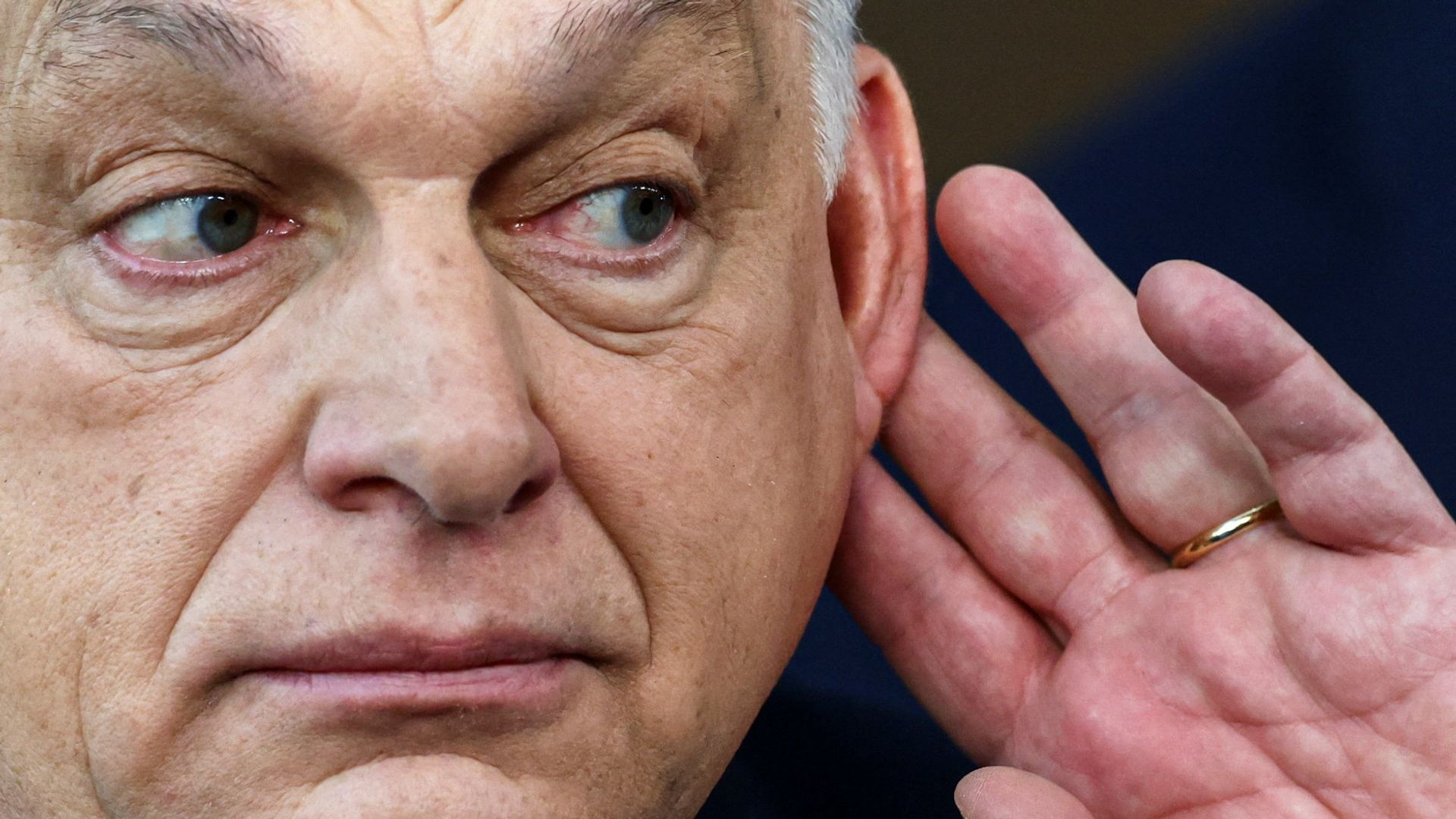
Every story needs a villain, and Viktor Orban fits the casting call perfectly. But focusing on the Hungarian veto is a mid-wit trap.
The focus on a single blocker masks the deeper, more uncomfortable truth: the "Big Three" (Germany, France, and Italy) are using the blockade as a convenient shield. It allows them to maintain the posture of total support while their treasuries quietly exhale a sigh of relief. If Orban didn't exist, the EU would have to invent him.
The delay exposes the structural rot in the European Union's decision-making process. The "consensus" model is a relic of a peaceful, post-Cold War era that no longer exists. By hitting this wall now, the EU is forced to confront the reality that its current architecture is incompatible with being a global power. We are watching the messy, painful birth of a multi-speed Europe. The aid blockade is the catalyst for the "Coalition of the Willing" model, where productive states bypass the laggards. That is a massive win for efficiency.
The Moral Hazard of Unending Credit
Let’s talk about the economics of the "blockade" that nobody wants to touch.
Injecting massive amounts of liquidity into a wartime economy without rigorous, milestone-based triggers creates a "moral hazard." In finance, this is when one party takes risks because someone else bears the cost. If the EU aid is seen as an infinite, guaranteed stream, the urgency to reform the internal tax structure, crack down on the last vestiges of the old guard, and digitize the economy vanishes.
- Scenario A: The money flows perfectly. The old systems remain. The war ends, and Ukraine is left with a mountain of debt and a hollowed-out administrative core.
- Scenario B: The money is hard to get. Every euro is fought for. The government is forced to implement "Diia-level" transparency across all sectors to prove to skeptics that the funds aren't being siphoned.
I have watched emerging markets stagnate for decades because they were "saved" too many times by international lenders. The friction in Brussels is actually a filter. It ensures that only the most critical reforms are pushed through.
Dismantling the "People Also Ask" Delusions
"Will Ukraine go bankrupt without EU aid?"
No. This is a fundamental misunderstanding of sovereign debt in a geopolitically essential state. The IMF, the US, and the "frozen" Russian assets are all parts of a complex liquidity puzzle. "Bankruptcy" for a nation like Ukraine is a political choice, not an accounting inevitability. The delay in EU funds simply shifts the leverage.
"Is the EU's delay a win for Russia?"
Only in the shortest of short-term PR cycles. In the long term, a Russia facing a more autonomous, industrially integrated Ukraine—supported by a Europe that has finally learned how to bypass its own internal vetoes—is in a much worse position. Putin thrives on the predictability of Western bureaucracy. This chaos is unpredictable.
The Hard Truth About European Defense
We need to be brutally honest: the aid blockade has done more to wake up the European defense industry than a decade of "strategic autonomy" speeches.
For thirty years, Europe outsourced its security to the US and its energy to Russia. The EU aid package was, in many ways, a way to buy a clean conscience without actually fixing the industrial base. Now that the money is stuck, the conversation has shifted from "How much can we write a check for?" to "How many 155mm shells can we actually build?"
The friction is forcing the continent to re-industrialize. You cannot buy a victory with a bank transfer if the factories are empty. The blockade is the "cold shower" that ends the era of the "checkbook superpower."
Stop Praying for Consensus
The obsession with "EU Unity" is a dead end. Unity in the EU usually means moving at the speed of the slowest, most compromised member. What we are seeing now is the end of that delusion.
The move toward "Enhanced Cooperation" or bilateral aid structures is superior in every way. It’s faster. It’s more targeted. It’s harder to veto. If Poland, the Baltics, and the Nordics want to move faster than Hungary or a hesitant Slovakia, they now have the blueprint to do so.
We are witnessing the death of the "Brussels-First" mindset. This isn't a failure of leadership; it's the inevitable decentralization of European power. The aid isn't "blocked"—it’s being rerouted through more efficient, less bureaucratic channels.
Stop mourning the 27-country consensus. It was a bottleneck masquerading as a virtue. The blockade hasn't stopped the support; it has just stripped away the masks.
The next time you see a headline about "Aid Blocked," understand what you’re really seeing: the necessary friction of a continent finally outgrowing its own rules.
Build the factories. Secure the bilateral deals. Let the bureaucrats in Brussels argue about the wording of a communique that no longer matters. The war will be won on the factory floor and in the trenches of bilateral diplomacy, not in a committee room in a Belgian rainy city.
The era of easy money is over. The era of serious power has begun.
Would you like me to analyze the specific industrial capacity of the "Coalition of the Willing" nations to see if they can bridge the gap without the central EU budget?