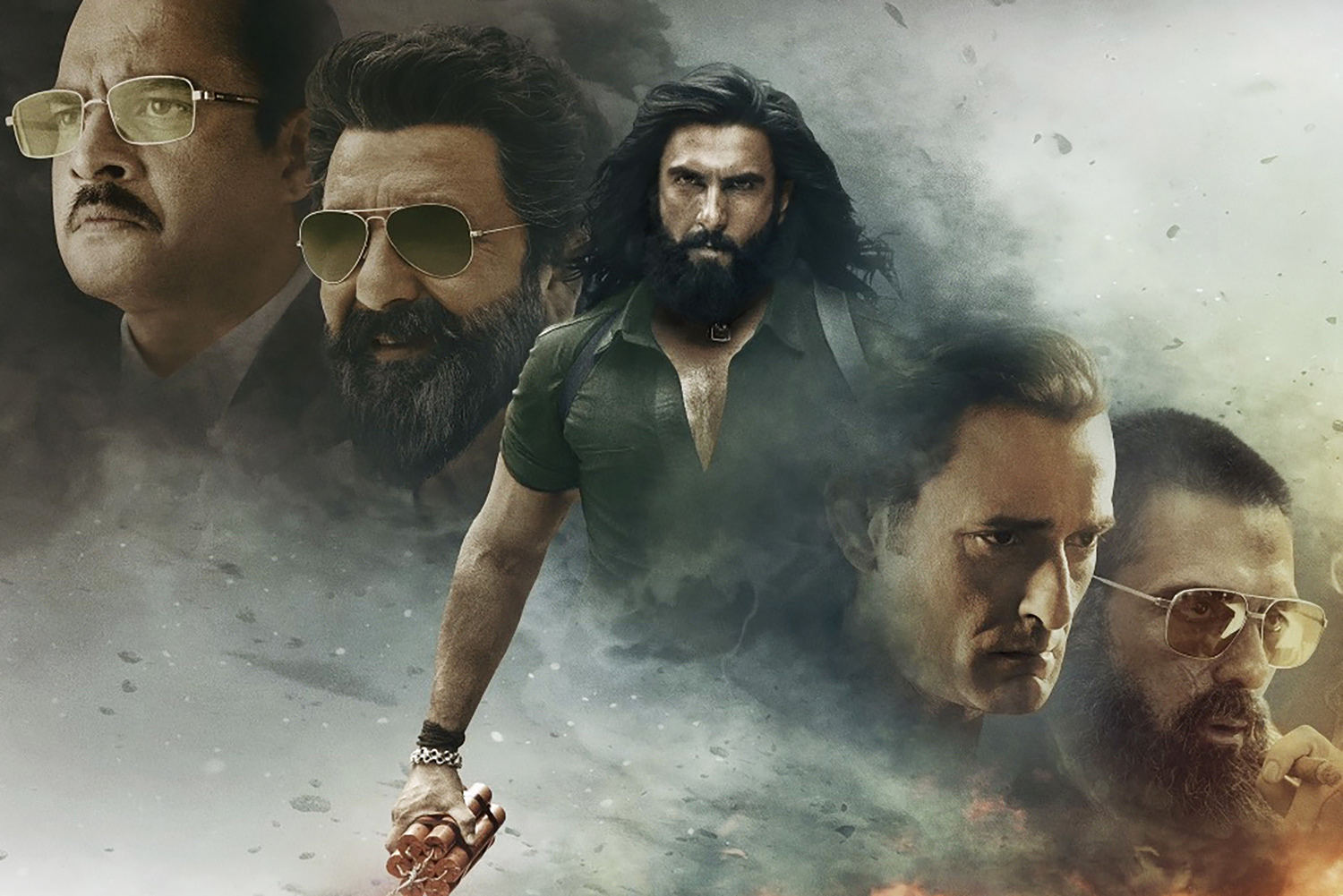
The commercial viability of a high-budget Bollywood spy sequel depends less on critical consensus and more on the mathematical relationship between brand equity and the audience's ideological friction. When a predecessor film divides a domestic market, the sequel inherits a "Polarization Premium"—a guaranteed floor of engagement driven by controversy—but it simultaneously risks a "Fatigue Discount" if the narrative mechanics fail to evolve beyond the initial shock value. To understand the trajectory of the modern Indian spy thriller, we must deconstruct the genre into its core operational variables: geopolitical signaling, star-power leverage, and the diminishing returns of the "Cinematic Universe" model.
The Triad of Spy Genre Mechanics
The success of a contemporary spy franchise is rarely an accident of storytelling. It is the result of three specific pillars of production:
- Geopolitical Arbitrage: Filmmakers utilize real-world tensions as a low-cost marketing engine. By framing narrative conflict around familiar nationalistic or cross-border anxieties, the production taps into pre-existing emotional reserves in the audience, reducing the need for original character development.
- The Star-Vehicle Multiplier: In the Indian context, the actor’s persona functions as a hedge against script volatility. If the plot logic fails, the "Super-A-Lister" serves as a physical manifestation of the brand, maintaining box office velocity during the critical first three days (the opening weekend window).
- Technological Spectacle as Subsidy: High-octane action sequences, often choreographed by international crews, serve as a visual subsidy for thin dialogue. The sensory input compensates for cognitive gaps in the screenplay, aiming for a "global standard" aesthetic that facilitates international distribution.
Measuring the Polarization Premium
A divisive first installment creates a unique market condition. Unlike a universally loved film, which must meet or exceed a high bar of quality to succeed, a divisive film sets a "conflict baseline." The sequel benefits from a built-in audience of "hate-watchers" and "defenders," both of whom contribute equally to the ticket count.
The risk of this model lies in the Conversion Rate of Controversy. While social media vitriol drives awareness (Top of Funnel), it can degrade the Long-Term Asset Value of the franchise. If the sequel doubles down on the elements that caused the initial rift, it may alienate the "Median Viewer"—the non-aligned segment of the market that provides the necessary volume for a film to reach "All-Time Blockbuster" status.
The Cost Function of Narrative Continuity
Sequels operate under a specific cost function where every minute of screen time spent "explaining" the previous film’s logic is a minute lost to new revenue-generating spectacle.
- Contextual Debt: The burden of carrying over complex plot points from previous entries. High contextual debt raises the barrier to entry for new viewers.
- Production Escalation: The industry standard dictates that a sequel must be "bigger" than its predecessor. This leads to a linear increase in budget but a non-linear (often logarithmic) increase in audience satisfaction.
- Talent Inflation: As a franchise matures, the cost of retaining lead actors and directors increases, squeezing the net profit margins even if the gross collection remains stable.
The Structural Failure of Modern Spy Narratives
Most critics focus on "bad writing," but the structural failure is more often an issue of Incentive Alignment. Production houses are incentivized to play it safe by adhering to proven templates, which leads to "Template Decay."
The second limitation is the Dichotomy of Stakes. To raise the tension, sequels often move from "local threats" to "existential global threats." When the stakes are constantly at a maximum, the audience experiences "Stake Sensitivity Loss." If every film involves a nuclear countdown or a virus that threatens the entire population, the individual life of the protagonist loses its weight. The narrative becomes a series of mathematical certainties rather than a journey of risk.
The Bottleneck of Domestic vs. Global Appeal
Bollywood’s spy thrillers face a strategic bottleneck: the "Localization-Globalization Paradox." To maximize domestic revenue, films often lean into specific cultural and political tropes that resonate deeply within India but may feel opaque or exclusionary to a global audience. Conversely, stripping the film of its "Indianness" to appeal to a Western market can result in a generic product that fails to compete with the 200-million-dollar budgets of Hollywood counterparts.
This creates a Resource Allocation Problem. Should the studio invest in a script that explores the nuances of intelligence work (High Complexity, Lower Mass Appeal), or should they invest in a 20-minute chase sequence in a European city (High Visual Capital, High Mass Appeal)? Data suggests that visual capital currently offers a higher Return on Investment (ROI) in the short term, but it contributes to the rapid onset of franchise fatigue.
Identifying the Fatigue Coefficient
Franchise fatigue is quantifiable. It can be observed when a film's "Opening Day to Lifetime Multiple" begins to shrink.
- The Hype Decay: If a film earns 40% of its total revenue in the first three days, it indicates that the "Brand" did the heavy lifting, but the "Product" failed to sustain word-of-mouth.
- The Repeat Value Index: Successful franchises rely on "Repeat Viewers." In a polarized environment, the repeat value for the non-partisan audience drops significantly, leaving the film dependent on a one-time viewing from a larger, but less engaged, group.
- Cross-Platform Dilution: The proliferation of spy-themed streaming series has lowered the perceived value of the genre. When a consumer can access 20 hours of high-quality espionage content on their phone, the "Theatrical Premium" for a two-and-a-half-hour movie must be exceptionally high to justify the ticket price.
The Strategic Pivot for Franchise Longevity
To survive the current cycle of polarization and fatigue, a franchise must transition from a "Transaction-Based Model" (selling a movie) to an "Ecosystem-Based Model" (selling a world). This requires three tactical shifts:
1. Decoupling Stars from IP
The most resilient franchises (e.g., James Bond, Mission: Impossible) eventually make the "Concept" more important than the specific "Actor." While Bollywood is currently personality-driven, the long-term sustainability of a spy universe requires a shift toward "Character Archetypes" that can outlive the physical prime of a single superstar.
2. Intellectual Property Diversification
Instead of direct sequels that merely repeat the same beat, the focus should shift to "Asymmetrical Spin-offs." This involves taking a side character or a minor plot point and expanding it into a different sub-genre—for example, moving from a "Tactical Action" film to a "Psychological Noir" thriller within the same universe. This reduces "Aesthetic Overlap" and captures different demographic segments.
3. The "Medium-Budget" Buffer
The current trend of "Megabudget or Nothing" is unsustainable. Studios must integrate medium-budget entries into their franchise roadmap. These smaller films can take more narrative risks, explore controversial themes without the pressure of a 500-crore break-even point, and serve as R&D for the larger tentpole releases.
The current climate of "audience bracing" is a symptom of a market that has been over-saturated with high-volume, low-substance entries. The sequel in question will likely succeed financially based on the sheer inertia of its predecessor’s brand. However, the true metric of its success will not be the first week’s gross, but the Sentiment Delta—the difference in audience reception between the first and second films. If the delta is negative, the franchise is effectively in "Liquidating Mode," extracting the remaining value from the brand before it becomes obsolete.
The strategic play for competing studios is not to mimic the polarized model, but to exploit the "Nuance Gap." There is a significant, underserved market segment looking for "Grounded Espionage"—stories that trade the invincible superhero trope for the vulnerability of actual intelligence work. By lowering the "Spectacle Spend" and increasing the "Script Density," a competitor can achieve higher profit margins with lower gross revenues, effectively outmaneuvering the bloated giants of the genre.
Would you like me to conduct a comparative financial analysis of the last three major Indian spy franchise releases to calculate their specific Fatigue Coefficients?