A digital watch flickers in the dim light of a container ship’s bridge. It is 3:00 AM. The officer on watch stares at a radar screen that feels suddenly too crowded, too small, and far too fragile. Outside, the black water of the Strait of Hormuz churns, a narrow ribbon of sea that serves as the jugular vein of the global economy. One wrong move here, one sudden command from a coastline bristling with tension, and the lights go out in a city thousands of miles away.
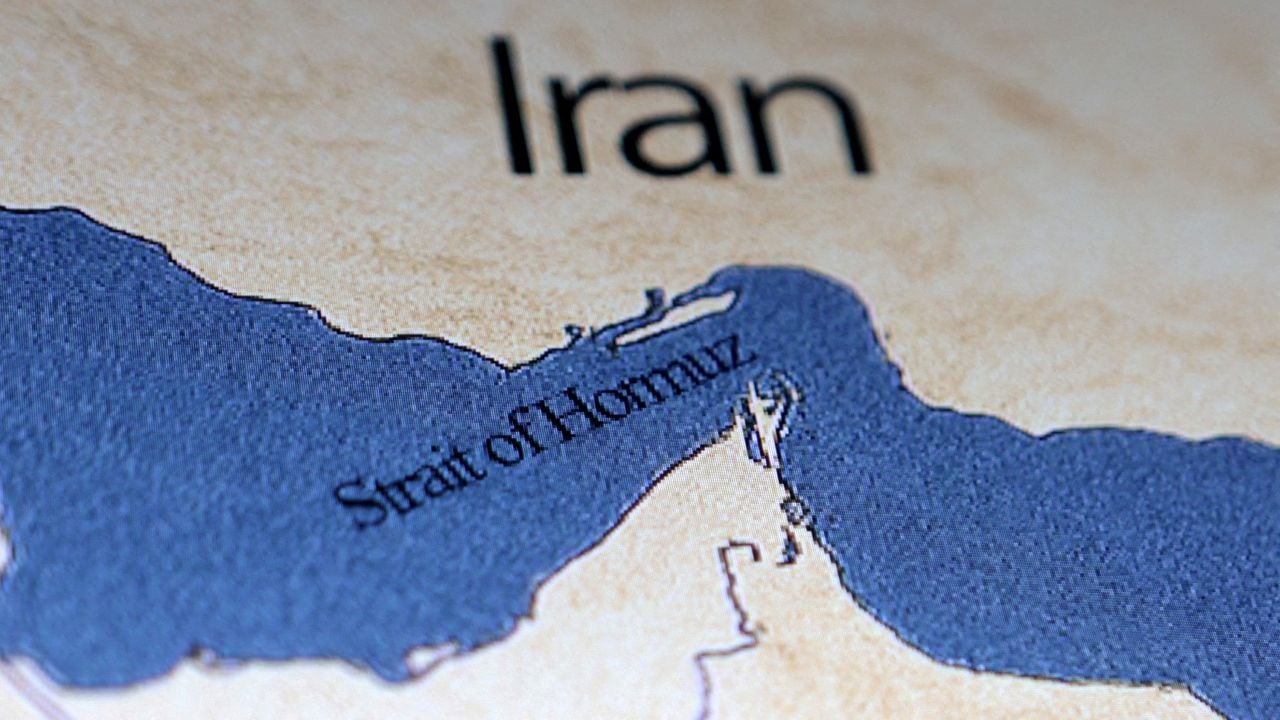
Most people never think about the Strait until the gas pumps stop working or the price of bread spikes. We live in a world of invisible dependencies. We assume the things we need—fuel, medicine, the plastic components of our smartphones—will simply appear when we click a button. But the reality is anchored in a strip of water only twenty-one miles wide at its narrowest point.
The Invisible Tripwire
When Iran disrupts traffic in these waters, it isn't just a local skirmish. It is a calculated tug on a global tripwire.
Consider a hypothetical baker in a small town in the Midwest. He doesn't track geopolitical shifts in the Middle East. He tracks the cost of the flour he buys and the electricity required to run his ovens. When a tanker is seized or a drone swarm shadows a cargo vessel in the Persian Gulf, insurance premiums for shipping companies don't just rise; they explode.
Shipping companies pass those costs to the distributors. The distributors pass them to the retailers. Suddenly, that baker finds his margins vanishing. He isn't being punished for his business choices. He is a casualty of a maritime bottleneck.
The facts are stark. Roughly one-sixth of the world’s oil consumption and one-third of the world’s liquified natural gas pass through this single corridor. It is the ultimate high-stakes game of "what if." Global leaders aren't just issuing condemnations because they like the sound of their own voices; they are trying to prevent a cascading failure of the modern world.
A History Written in Salt and Oil
The tension isn't new, but the tools of disruption have evolved. Decades ago, it was about naval mines and direct boarding. Today, it involves sophisticated electronic warfare, GPS jamming, and the persistent threat of "asymmetric" tactics.
Think of the Strait as a crowded hallway where everyone is carrying a tray of expensive glassware. If one person decides to start swinging their arms, everyone else has to stop. The mere threat of a closure is often as effective as an actual blockade. It creates uncertainty. And in the world of global finance, uncertainty is the most expensive commodity there is.
International law, specifically the United Nations Convention on the Law of the Sea, guarantees "transit passage" for all vessels. This means that even though the shipping lanes fall within the territorial waters of Oman and Iran, ships have the right to pass through as long as they do so continuously and expeditiously. When that right is challenged, the very foundation of international cooperation begins to crack.
The Human Cost of High-Level Chess
We often talk about these events in terms of "sanctions," "geopolitics," and "strategic interests." These words are cold. They mask the reality of the people caught in the middle.
Imagine the crew of a seized tanker. They are often sailors from across the globe—the Philippines, India, Eastern Europe—who are simply trying to send money back to their families. Suddenly, they are pawns in a theater of war they didn't sign up for. They sit in cramped quarters, waiting for diplomats in far-off capitals to trade concessions for their freedom.
Their fear is real. The isolation is absolute.
Then there is the psychological toll on the global market. We have built a "just-in-time" civilization. We don't keep massive stockpiles of resources anymore because efficiency dictates that we move goods exactly when they are needed. This efficiency makes us wealthy, but it also makes us incredibly vulnerable. We have traded resilience for speed.
When the Strait of Hormuz is threatened, that vulnerability is laid bare. We see it in the frantic fluctuations of the Brent Crude index. We see it in the emergency meetings of the G7. We see it in the realization that our comfortable lives depend on the restraint of a few thousand people standing on a rocky coastline half a world away.
Beyond the Condemnations
Western powers and their allies often respond with a show of force—destroyers and aircraft carriers meant to "ensure the freedom of navigation." But iron and steel can only do so much. The real battle is one of will and leverage.
Iran knows that it holds a unique lever. By signaling its ability to choke the Strait, it forces the world to pay attention to its grievances, its economy, and its place in the regional hierarchy. It is a dangerous gambit. If the pressure becomes too great, the response could escalate beyond diplomatic protests into a conflict that no one can truly control.
There is a deep irony in our current situation. We are transitioning toward green energy, seeking to leave the era of fossil fuels behind. Yet, our path to that future is paved with the very oil that flows through this contested passage. The minerals needed for solar panels and the components for wind turbines are moved on ships that rely on the stability of these same maritime routes. We cannot escape the geography of the Persian Gulf just yet.
The Weight of a Single Mile
The distance across the Strait is roughly the length of a long morning commute. Yet, within those miles, the world's competing visions for the future collide. On one side, there is the drive for a regulated, predictable global order. On the other, there is the use of chaos as a tool of survival and power.
Every time a vessel clears the Strait and enters the open Arabian Sea, a small victory for the status quo is won. But the tension never truly dissipates. It lingers like the humidity over the water, heavy and suffocating.
We watch the headlines and see the words "condemn" and "disruption." We see the photos of grey ships and dark oil. But if you look closer, you see something else. You see the fragility of the threads that connect us. You see a world that is much smaller than we like to admit.
A single command given in a bunker in Tehran can change the life of a truck driver in Berlin or a factory worker in Shanghai. We are all passengers on those tankers, whether we know it or not, drifting through a narrow passage where the margin for error is measured in inches and the cost of failure is measured in lives.
The sun rises over the Strait, burning through the haze. The ships continue to move, their engines throbbing with a rhythmic, mechanical hope. For now, the jugular remains open. But the hand on the throat never quite lets go.