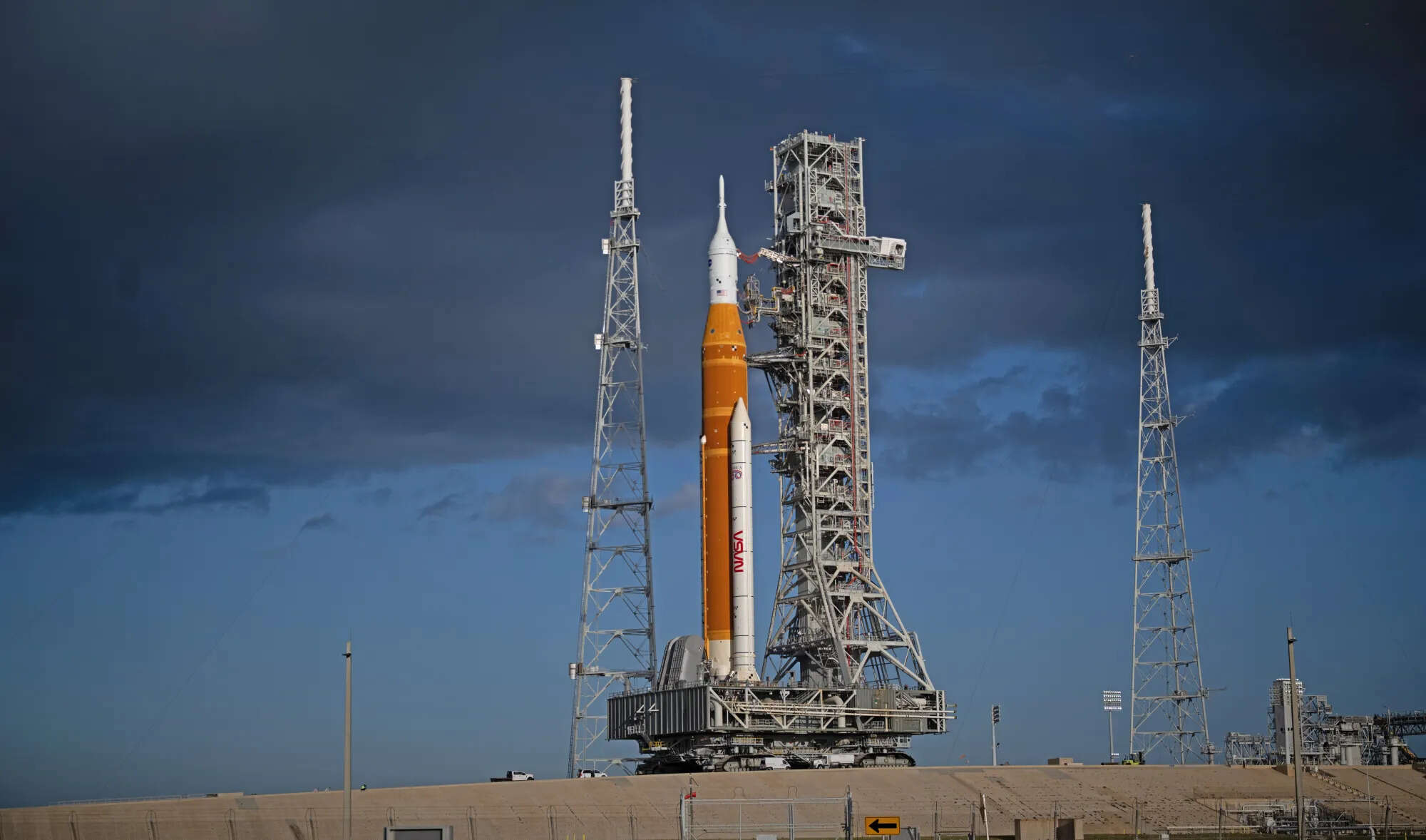
Seven days. That’s all the time left before the Florida coast turns into a kinetic display of fire and physics. We’ve waited fifty years for this. After decades of low-Earth orbit experiments and robotic probes, humans are finally heading back to deep space. Artemis II isn’t just a flight test. It’s the moment we find out if the Space Launch System (SLS) and the Orion capsule can actually keep a crew alive in the radiation-soaked void beyond our magnetic shield.
The countdown isn't just for a rocket. It's for the four people sitting on top of 8.8 million pounds of thrust. Reid Wiseman, Victor Glover, Christina Koch, and Jeremy Hansen aren't just names on a flight manifest. They're the ones carrying the weight of a multi-billion dollar program that has faced every imaginable delay, budget scrutiny, and technical hurdle. If this goes right, the moon becomes a permanent base. If it goes wrong, the future of human spaceflight hits a wall.
The Reality of the 2026 Launch Window
Space doesn't care about our schedules. The "window" isn't a suggestion; it's a cold calculation of orbital mechanics. NASA is targeting a specific T-zero because the Earth and the Moon have to be in the perfect position for Orion to slingshot around the lunar far side.
You might hear people complaining about why we didn't go sooner. Honestly, the delay from 2024 to 2026 saved the mission. NASA found issues with the Orion heat shield during the uncrewed Artemis I reentry. Charred material didn't behave exactly as the simulations predicted. In the Apollo era, they might have "sent it" and hoped for the best. Today, with the world watching in 4K, you don't gamble with crew safety.
The current 2026 window is tight. If the SLS doesn't leave the pad within the designated period, the alignment shifts. We’d be looking at weeks of waiting for the next lunar cycle. This isn't like a commercial flight you can just rebook. The cryogenic fuels—liquid hydrogen and liquid oxygen—are temperamental. They leak. They boil off. Every scrubbed launch attempt wears down the hardware and the nerves of the ground crew at Kennedy Space Center.
What Happens During the Ten Day Mission
Most people think they just fly to the Moon and come back. It's way more complex than that. The mission profile for Artemis II is a "High Earth Orbit" trajectory.
First, the SLS Block 1 sends Orion into a preliminary orbit. The crew stays there for nearly 24 hours. Why? To make sure the Life Support Systems work. If the carbon dioxide scrubbers fail or the water recovery system glitches, they need to be close enough to Earth to come home fast. Once the "go" is given, the Interim Cryogenic Propulsion Stage (ICPS) fires. That’s the kick that sends them toward the Moon.
They won't orbit the Moon. They’ll perform a lunar flyby. They'll swing around the hidden side, using gravity to whip them back toward Earth. During that time, they’ll be further from home than any human in history. They’ll see the Earth as a tiny blue marble, just like the Apollo 8 crew did, but with modern sensors capturing data that scientists have craved for half a century.
Testing the Orion Life Support
Living in Orion isn't like living on the International Space Station (ISS). The ISS is huge. Orion is the size of a small SUV. Four people will be cramped in there for ten days. They’ll be testing:
- Exercise equipment: Muscles waste away fast in microgravity.
- Radiation shielding: Deep space has much higher radiation levels than the ISS.
- Manual piloting: Victor Glover will actually fly the craft manually during certain phases to ensure the backup systems are responsive.
Why This Isn't Just Apollo 2.0
I hear the skeptics all the time. "We did this in the 60s, why is it so hard now?"
The tech is different. Apollo was a sprint; Artemis is a marathon. We aren't just trying to plant a flag and leave footprints. We’re building a supply chain. The SLS is the most powerful rocket ever built, but it’s also a bridge to the Gateway—a planned space station that will orbit the Moon.
The Artemis II crew is also more diverse than any previous lunar mission. This matters because space shouldn't be a private club for one demographic. Christina Koch holds the record for the longest single spaceflight by a woman. Victor Glover is a seasoned Navy captain. This team represents the best of what we can do when we stop treating space as a Cold War battlefield and start treating it as the next frontier for everyone.
The Economic Stakes of a Successful Launch
NASA isn't the only player anymore. Companies like SpaceX, Blue Origin, and Boeing are watching this launch with intense focus. Artemis II is the green light for the private sector. If Orion performs, the contracts for lunar landers and lunar Rovers become real.
We're talking about a lunar economy. There's water ice in the permanent shadows of the lunar south pole. That ice can be turned into rocket fuel. The Moon is essentially a gas station for the rest of the solar system. Artemis II is the first step in proving we can reliably ferry the "drivers" to that station.
If this launch fails or sees another major delay, the political will to fund these missions might crumble. Space is expensive. It’s easy for politicians to look at a multi-billion dollar rocket and say the money should stay on the ground. A flawless Artemis II mission shuts down those arguments. It proves the ROI is there—not just in science, but in national prestige and technological advancement.
Watching the Countdown
If you’re planning to watch, don't just look for the flames. Watch the T-minus ten-minute mark. That’s when the "terminal count" begins. The computers take over. The ground crew holds their breath.
The vibration from an SLS launch is so intense it can be felt miles away. It’s a physical manifestation of human ambition. You’re seeing 1,600 tons of propellant burning in minutes.
Keep an eye on the weather reports for Cape Canaveral. Florida in 2026 is still unpredictable. High-altitude winds or a stray thunderstorm can pause the dream in a heartbeat. But when those twin Solid Rocket Boosters ignite, everything changes. We stop being a species confined to one planet.
Check the official NASA TV schedule or use a reputable space tracking app to get the exact ignition time for your time zone. Don't rely on social media feeds that might be delayed by thirty seconds. You want to see the crack of the atmosphere in real-time. Set your alerts for the pre-launch briefings starting 24 hours out to hear the final "go/no-go" polls from the flight directors. This is history happening in your backyard. Don't miss the moment the hatch closes.